Your cleaning cabinet probably costs more than your monthly coffee habit. And half those bottles? You’re paying for water, plastic, and chemicals you can’t pronounce.
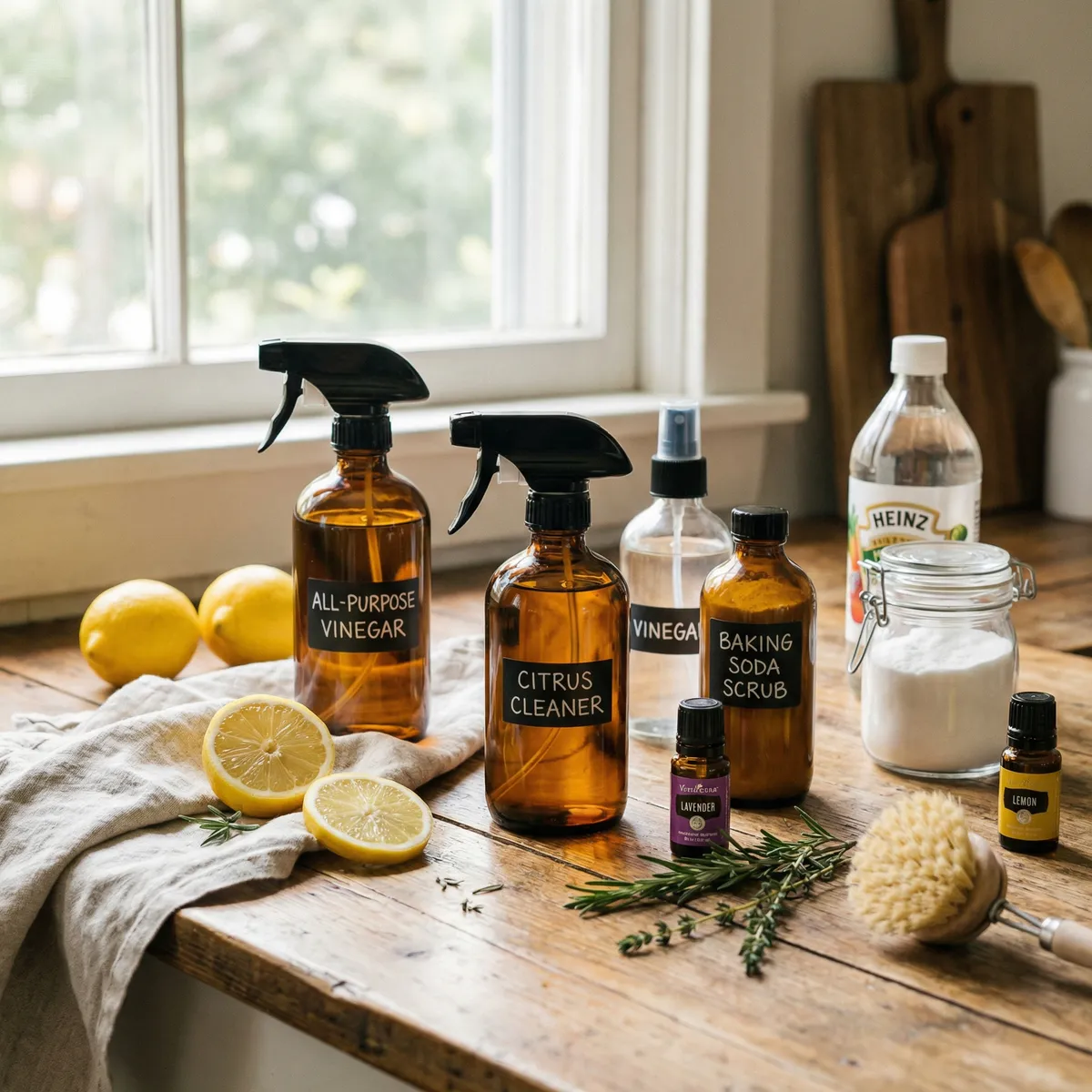
Here’s what nobody tells you: most cleaning tasks need four ingredients. Not forty products. Four. White vinegar, baking soda, castile soap, and maybe some essential oils if you care about scent. That’s it.
The EPA found that indoor air can be 2-5 times more polluted than outdoor air, mostly because of volatile compounds released by conventional cleaners. Natural alternatives work just as well without turning your home into a chemistry experiment. And they’re cheaper. A lot cheaper.
Why Natural Cleaning Actually Makes Sense
I used to think natural cleaning was for people who had too much time and not enough sense. Then I looked at what I was spending on cleaning products and what was actually in them. Turns out I was the one without sense.
The cost difference is ridiculous. Concentrated castile soap costs about $12 per liter and makes 15 liters of diluted cleaner. That’s $0.80 per liter. Compare that to $2.50-3.50 for ready-to-use spray bottles. You’re literally paying for water and plastic.
The health stuff is real. Conventional cleaners contain ingredients linked to respiratory issues, skin irritation, and hormone disruption. Not in scary theoretical ways. In “this is why your eyes water when you clean the bathroom” ways.
They work. Laboratory testing shows natural cleaners remove 94% of test soils compared to 96% for conventional products. That 2% difference? Not noticeable in real life. The main difference is you need to let natural cleaners sit for 5-10 minutes instead of wiping immediately.
The Four Ingredients That Clean Everything
Forget the 20-product arsenal. Here’s what you actually need.
White Vinegar
Acetic acid at 5% concentration. Dissolves mineral deposits, cuts through soap scum, and kills most bacteria. Don’t use it on marble or granite (the acid etches stone), but it’s safe for almost everything else.
Cost: About $3 for a gallon. One gallon makes multiple bottles of cleaner.
Baking Soda
Mild abrasive that scrubs without scratching. Also neutralizes odors and provides gentle alkalinity for breaking down organic matter.
Cost: $2 for a box that lasts months.
Castile Soap
Plant-based soap that cuts grease and cleans surfaces without synthetic detergents. Dr. Bronner’s is the most common brand, but any unscented liquid castile soap works.
Cost: $12-15 per liter of concentrate, which dilutes to 15+ liters.
Essential Oils (Optional)
Tea tree oil has antimicrobial properties. Lemon and orange oils smell good and boost cleaning power slightly. But they’re optional. Your cleaner works fine without them.
Cost: $8-12 per bottle, lasts a long time since you use drops.
Recipes That Actually Work
These aren’t Pinterest fantasies. These are formulas I’ve tested and use regularly.
All-Purpose Cleaner
What you need:
- 1 cup water
- 1 cup white vinegar
- 10 drops lemon essential oil (optional)
Mix in a spray bottle. Shake before each use.
Use it on: Counters, walls, appliances, bathroom surfaces (not marble).
How it works: Vinegar breaks down dirt and grime. Water dilutes it so it doesn’t damage surfaces. The lemon oil adds scent and a bit of extra cleaning power.
Tip: For stubborn spots, sprinkle baking soda first, then spray this cleaner. The fizzing action lifts stuck-on mess.
Glass and Mirror Cleaner
What you need:
- 2 cups water
- 1/4 cup white vinegar
- 1/4 cup rubbing alcohol
Mix in a spray bottle.
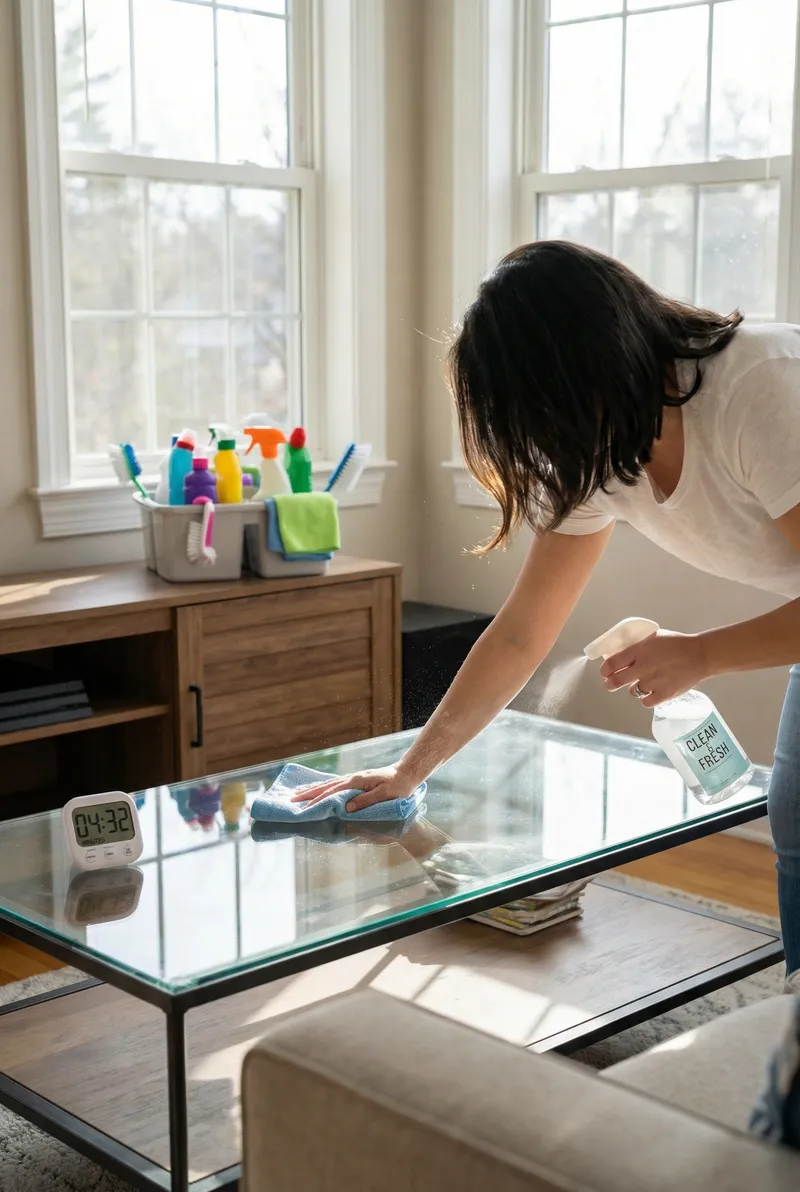
Use it on: Windows, mirrors, glass tables.
How it works: Vinegar cuts through film. Alcohol speeds evaporation to prevent streaks.
Tip: Spray lightly, wipe with a damp microfiber cloth in vertical strokes, then immediately wipe with a dry microfiber cloth. Paper towels leave lint and streaks.
Bathroom Scrub
What you need:
- 1/2 cup baking soda
- Liquid castile soap (enough to make a paste)
- 10 drops tea tree oil
Mix into a paste consistency.
Use it on: Tubs, sinks, tile, grout.
How it works: Baking soda provides gentle abrasion. Castile soap lifts dirt. Tea tree oil kills bacteria and mold.
Tip: Apply, let sit 10-15 minutes, scrub with a brush, rinse thoroughly.
Toilet Bowl Cleaner
What you need:
- 1 cup baking soda
- 1/4 cup citric acid powder
- 1/2 cup white vinegar
Sprinkle baking soda and citric acid in the bowl. Add vinegar. Let it fizz for 15 minutes. Scrub and flush.
How it works: Citric acid dissolves mineral deposits and stains. Baking soda scrubs. Vinegar activates the fizzing action that lifts grime.
Floor Cleaner
What you need:
- 1 gallon warm water
- 1/4 cup castile soap
- 10 drops essential oil (optional)
Mix in a bucket.
Use it on: Tile, vinyl, laminate. (For hardwood, use less soap: 1 tablespoon per gallon.)
How it works: Castile soap cuts through dirt without leaving residue.
Tip: Use a damp mop, not a soaking wet one. Excess water damages floors.
Disinfectant Spray
What you need:
- 1 cup water
- 1/4 cup hydrogen peroxide (3%)
- 1/4 cup white vinegar
- 10 drops tea tree oil
Mix in a spray bottle. Store in a dark bottle (light breaks down hydrogen peroxide).
Use it on: Cutting boards, doorknobs, light switches, counters.
How it works: Hydrogen peroxide kills 99.9% of bacteria including E. coli and Salmonella. Tea tree oil adds antimicrobial power. Vinegar boosts cleaning.
Important: Let it sit for 10 minutes before wiping. That contact time is crucial for killing bacteria.
What Not to Mix
Some combinations are dangerous. Don’t experiment.
Never mix:
- Vinegar + hydrogen peroxide (creates corrosive peracetic acid)
- Vinegar + bleach (creates toxic chlorine gas)
- Ammonia + bleach (creates toxic chloramine gas)
Safe to mix:
- Baking soda + vinegar (fizzes but neutralizes each other’s cleaning power)
- Castile soap + water
- Essential oils + any of the above
Common Mistakes and How to Fix Them
Mistake 1: Not Letting It Sit
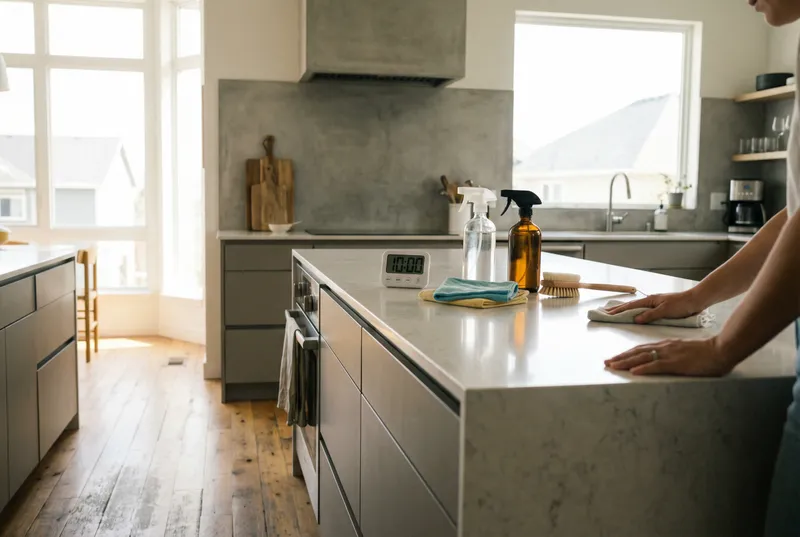
You spray and immediately wipe. Natural cleaners need 5-10 minutes of contact time to work. Spray, walk away, come back and wipe.
Mistake 2: Using Vinegar on Everything
Vinegar etches marble, granite, and natural stone. It also damages hardwood floor finishes over time. Use castile soap and water on these surfaces instead.
Mistake 3: Making Too Much at Once
DIY cleaners don’t have preservatives. Make small batches (one spray bottle at a time) and use within 4-6 weeks. Add 1% rubbing alcohol to extend shelf life slightly.
Mistake 4: Expecting Instant Results
Natural cleaners work through chemistry, not harsh solvents. They need time. If you’re used to instant results from conventional cleaners, adjust your expectations. The trade-off is worth it.
Mistake 5: Using the Wrong Tool
Microfiber cloths are essential. Paper towels smear and leave lint. Old t-shirts don’t absorb well. Invest in 20-25 microfiber cloths (about $15-20) and wash them weekly in hot water without fabric softener.
Storage and Shelf Life
Glass spray bottles: Best for cleaners with essential oils (oils can degrade plastic over time). Cost $3-5 each.
Plastic spray bottles: Fine for vinegar and castile soap solutions. Reuse old cleaner bottles after washing thoroughly.
Dark bottles: Necessary for hydrogen peroxide solutions (light breaks it down).
Labels: Always label bottles with ingredients and date. If you reuse bottles, make sure they’re clearly marked so nobody mistakes cleaner for something else.
Shelf life:
- Vinegar solutions: 6-12 months
- Castile soap solutions: 4-6 weeks (add 1% rubbing alcohol to extend)
- Hydrogen peroxide solutions: 2-3 months in dark bottles
- Baking soda: Indefinitely in sealed container
The Real Cost Comparison
Let’s do the math for a year of cleaning supplies.
Conventional products (typical household):
- All-purpose cleaner: $4 x 12 = $48
- Glass cleaner: $4 x 6 = $24
- Bathroom cleaner: $5 x 12 = $60
- Floor cleaner: $6 x 6 = $36
- Disinfectant: $5 x 8 = $40
- Total: $208/year
Natural DIY products:
- White vinegar (2 gallons): $6
- Baking soda (4 boxes): $8
- Castile soap (1 liter): $15
- Hydrogen peroxide: $6
- Essential oils: $20
- Spray bottles (one-time): $15
- Microfiber cloths (one-time): $20
- Total first year: $90
- Total subsequent years: $55
You save $118 in year one, $153 every year after. Plus you eliminate plastic waste from 40+ bottles annually.
Your First Week Challenge
Don’t convert everything at once. Start with one cleaner and one room.
Week 1: All-purpose cleaner in the kitchen
- Make one bottle of vinegar-water cleaner
- Use it for counters, appliances, and daily wipes
- Notice how it works compared to your old cleaner
Week 2: Add glass cleaner
- Make the vinegar-alcohol-water mix
- Clean all mirrors and windows
- Compare streak levels to commercial cleaner
Week 3: Tackle the bathroom
- Make baking soda scrub and toilet cleaner
- Deep clean once, then maintain weekly
- Notice the lack of chemical smell
Week 4: Floors and disinfecting
- Make floor cleaner for your surface type
- Add disinfectant spray for high-touch areas
- Calculate how much money you’ve saved
After four weeks, you’ll know if natural cleaning works for your home. Most people who try it properly never go back. Not because they’re trying to save the planet (though that’s a bonus), but because it’s cheaper, easier, and their house doesn’t smell like a chemical factory.
The cleaning industry wants you to believe you need specialized products for every surface. You don’t. You need four ingredients and the willingness to let them sit for a few minutes. That’s it.