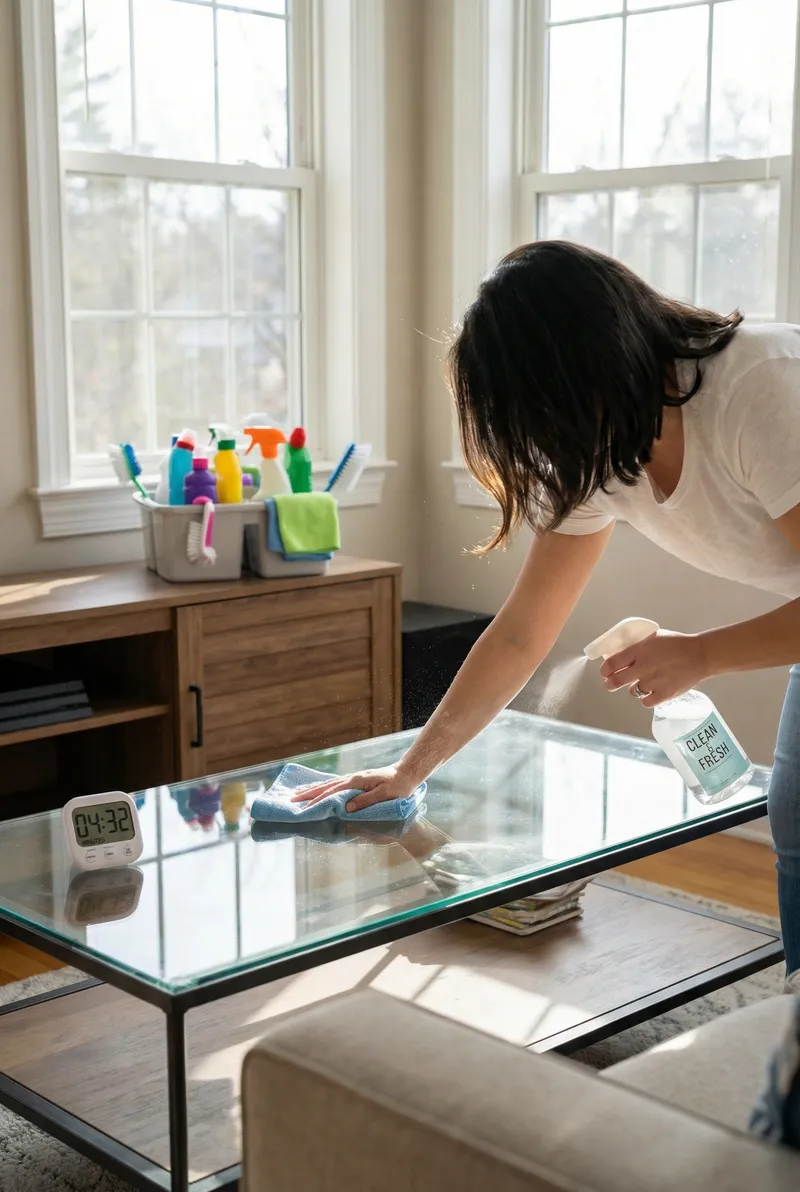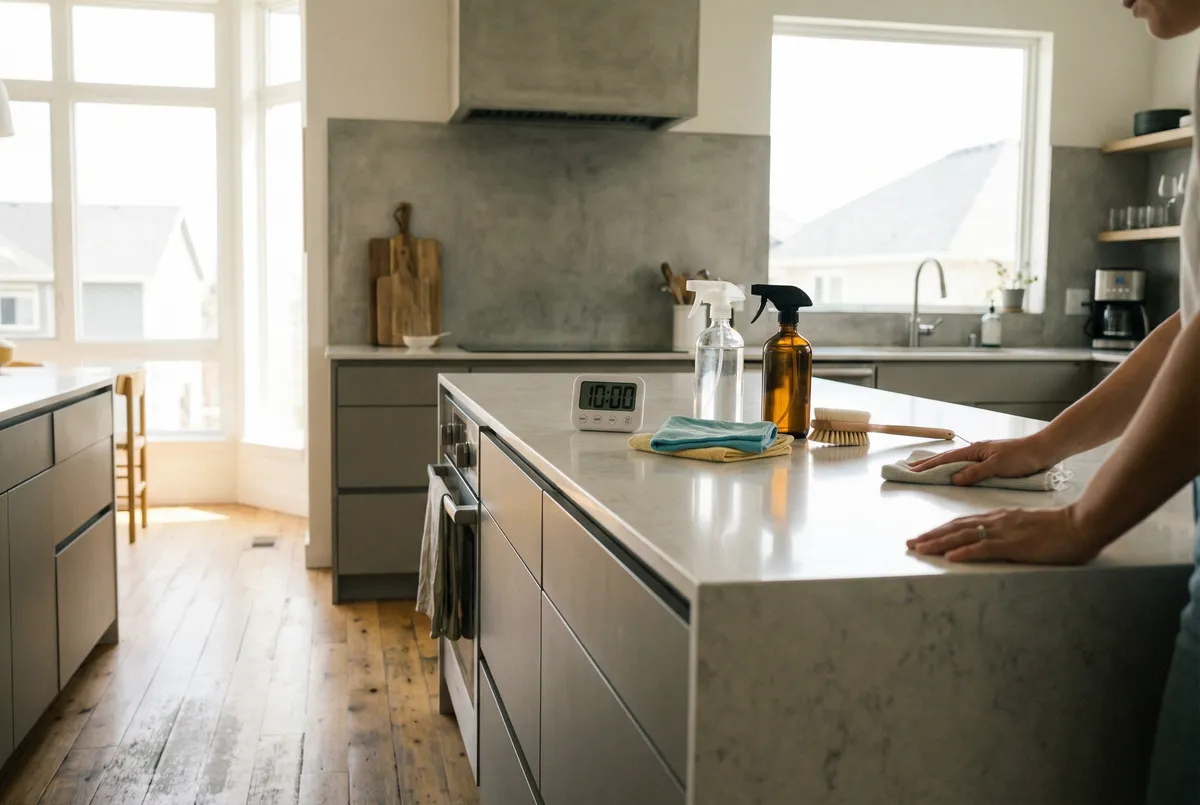
You don’t have a cleaning problem. You have a time problem.
Most cleaning advice assumes you have hours to dedicate to scrubbing baseboards and organizing closets. But you don’t. You have 15 minutes between getting home from work and needing to start dinner. You have 5 minutes before guests arrive. You have 1 minute before you need to leave the house.
Here’s what changed my approach: stop trying to deep clean everything and start maintaining everything. Small, consistent actions beat marathon cleaning sessions. Always.
The 1-Minute Rule That Changes Everything
If a task takes less than one minute, do it immediately. Don’t add it to a list. Don’t save it for later. Just do it.
This sounds too simple to work. It works.
Tasks that actually take less than 60 seconds:
- Hanging up your coat instead of draping it over a chair
- Putting shoes in the closet instead of by the door
- Wiping the bathroom counter after brushing your teeth
- Loading your breakfast dishes into the dishwasher
- Throwing junk mail directly into recycling
- Putting the TV remote back on the coffee table
- Fluffing throw pillows after sitting on the couch
The problem isn’t that these tasks are hard. The problem is we tell ourselves “I’ll do it later” and then 47 small tasks pile up into an overwhelming mess.
Why it works: You eliminate decision fatigue. You don’t waste mental energy deciding when to do something. You see it, you do it, it’s done.
The mindset shift: Most tasks you dread take far less time than you think. I timed myself putting away a week’s worth of shoes scattered around the bedroom. 34 seconds. I’d been stepping over them for three days.
The 5-Minute Quick Clean
When you have five minutes and your house looks like a disaster, here’s the system that actually works.
Step 1: Grab a Laundry Basket (30 seconds)
Walk through your main living areas and toss in anything that doesn’t belong. Shoes, mail, toys, coffee mugs, random socks. Don’t sort it. Don’t put things away yet. Just collect.
Step 2: Set a Timer (5 seconds)
Seriously. Set a timer for 5 minutes. This prevents you from getting distracted and turning a quick clean into an hour-long project.
Step 3: Pick One High-Traffic Zone (4 minutes)
Choose the area guests will see first. Usually the entryway or kitchen counter. Clear clutter, wipe surfaces, straighten what’s left.
Don’t try to clean the whole house. One zone that looks good beats five zones that look half-done.
Step 4: Return Basket Items (25 seconds)
If you have time, put things back where they belong. If you don’t, stash the basket in a closet or bedroom. You can sort it later when guests aren’t arriving in 3 minutes.
Real example: My neighbor texted “stopping by in 10 minutes.” I grabbed a basket, collected everything from the living room and kitchen, wiped the counters, and stashed the basket in my bedroom. Total time: 4 minutes 40 seconds. She complimented how clean my house looked.
The 15-Minute Daily Routine
Fifteen minutes per day keeps your house consistently clean without weekend marathon sessions. Here’s how to structure it.
Option 1: Room-by-Room Schedule
Assign each room a day of the week. Spend your 15 minutes only in that room.
- Monday: Bedrooms (make beds, put away clothes, quick vacuum)
- Tuesday: Bathrooms (wipe counters, clean toilets, mop floors)
- Wednesday: Kitchen (wipe appliances, clean sink, sweep floor)
- Thursday: Living areas (dust, vacuum, straighten furniture)
- Friday: Catch-up day (whatever you missed or needs extra attention)
Option 2: Task-by-Task Schedule
Focus on one type of cleaning each day.
- Monday: Bathrooms everywhere
- Tuesday: Dusting all surfaces
- Wednesday: Vacuum all floors
- Thursday: Mop all hard floors
- Friday: Laundry and linens
Option 3: Priority Approach
Look at your house and clean whatever looks worst. No schedule. Just 15 minutes on the biggest problem area.
This works if your house has uneven traffic patterns. My first floor gets destroyed by dogs and kids. My upstairs office stays clean for weeks. So I spend most 15-minute sessions downstairs.
The key: Pick one approach and stick with it for at least two weeks. Consistency matters more than which system you choose.
The Five Things Method
Every messy room contains only five types of items:
- Trash - Throw it away
- Dishes - Take them to the kitchen
- Laundry - Put in hamper or washing machine
- Things that have a place - Put them there
- Things without a place - Deal with these last
Address them in this exact order. Don’t skip ahead.
Why this order matters: Trash is fastest to handle. Dishes and laundry have obvious destinations. Things with homes are straightforward. Things without homes require decisions, which take mental energy you don’t have at the end of a long day.
Example: My living room after a busy week had 23 items out of place. Using this method:
- Trash (3 items): 15 seconds
- Dishes (4 mugs): 30 seconds
- Laundry (2 hoodies): 20 seconds
- Things with homes (12 items): 2 minutes
- Things without homes (2 items): Ignored them for now
Total time: 3 minutes 5 seconds. Room went from chaos to functional.
Speed Cleaning Strategies That Actually Work
Use a Timer to Stay Focused
Set a timer for 30 minutes and put on music or a podcast. When the timer goes off, you’re done. This prevents cleaning from expanding to fill your entire evening.
Clean Categorically
Do all similar tasks at once. Clean all bathrooms in one session. Change all bed sheets in one session. Dust all surfaces in one session.
Why it works: You build rhythm and momentum. You work faster because you’re not switching between different types of tasks.
Let Products Do the Work
Spray bathroom cleaner and walk away. Let it sit for 5-10 minutes while you do something else. Come back and wipe. The stuck-on grime will wipe away without scrubbing.
This is the difference between 2 minutes of hard scrubbing and 30 seconds of easy wiping.
Keep Supplies Where You Use Them
Store cleaning supplies in each bathroom. Keep a duster in the living room. Put a small vacuum upstairs and downstairs.
The math: Walking to get supplies takes 30-60 seconds each way. If you clean 5 times per week, that’s 5-10 minutes wasted just walking. Over a year, that’s 4-8 hours of your life spent retrieving cleaning supplies.
Make a To-Do List Before You Start
Write down exactly what you’re cleaning and in what order. This prevents you from getting distracted and wandering from room to room accomplishing nothing.
Bad approach: “I’ll clean the house.”
Good approach: “Kitchen counters, bathroom sink, vacuum living room, in that order.”
Common Mistakes That Waste Time
Mistake 1: Waiting for a Big Block of Time
You keep thinking “I’ll deep clean this weekend” and then the weekend comes and you don’t want to spend 4 hours cleaning. So nothing gets done.
Fix: Fifteen minutes today beats four hours you’ll never actually do.
Mistake 2: Cleaning Without a Plan
You start in the kitchen, notice the living room is messy, go there, see laundry that needs folding, head to the bedroom, remember you need to clean the bathroom. Three hours later, nothing is actually finished.
Fix: Pick one room or one task. Finish it completely. Then move on.
Mistake 3: Perfectionism
You can’t just wipe the counter. You have to move everything, clean behind the coffee maker, organize the spice rack, and scrub the backsplash.
Fix: Good enough is good enough. Wipe the visible surfaces and move on. Save deep cleaning for when you actually have time.
Mistake 4: Not Involving Your Household
You’re the only one cleaning while everyone else makes messes.
Fix: Fifteen minutes is short enough that even busy family members can’t say no. Assign specific tasks to each person. Everyone cleans at the same time.
The Closing Duties System
At the end of each day, do 3-5 critical tasks that make tomorrow easier. Same tasks, same order, every night.
My closing duties (takes 8 minutes):
- Load dishwasher and start it
- Wipe kitchen counters and stove
- Take out trash if full
- Put away anything on the coffee table
- Set up coffee maker for morning
Why it works: You wake up to a functional kitchen instead of yesterday’s disaster. Starting the day with a clean space changes your entire mood.
Customize it: Your closing duties should be whatever makes your morning easier. Maybe it’s packing lunches. Maybe it’s laying out clothes. Maybe it’s clearing the entryway so you don’t trip over shoes.
Your First Week Challenge
Try this for seven days:
Day 1-2: Practice the 1-minute rule. Every time you see a task that takes less than 60 seconds, do it immediately.
Day 3-4: Add a 5-minute quick clean. Set a timer, pick one zone, clean it.
Day 5-6: Implement a 15-minute daily routine. Choose one of the three approaches and stick with it.
Day 7: Establish your closing duties. Pick 3-5 tasks that make tomorrow easier.
After one week, you’ll notice two things:
- Your house stays consistently cleaner without weekend marathon sessions
- Cleaning feels less overwhelming because you’re never facing a huge mess
The secret isn’t working harder. It’s working smarter. Small actions, done consistently, beat occasional deep cleaning every time.
Most people fail at cleaning because they’re trying to maintain a magazine-perfect home. You don’t need that. You need a functional home that doesn’t stress you out. That’s achievable in 15 minutes per day.