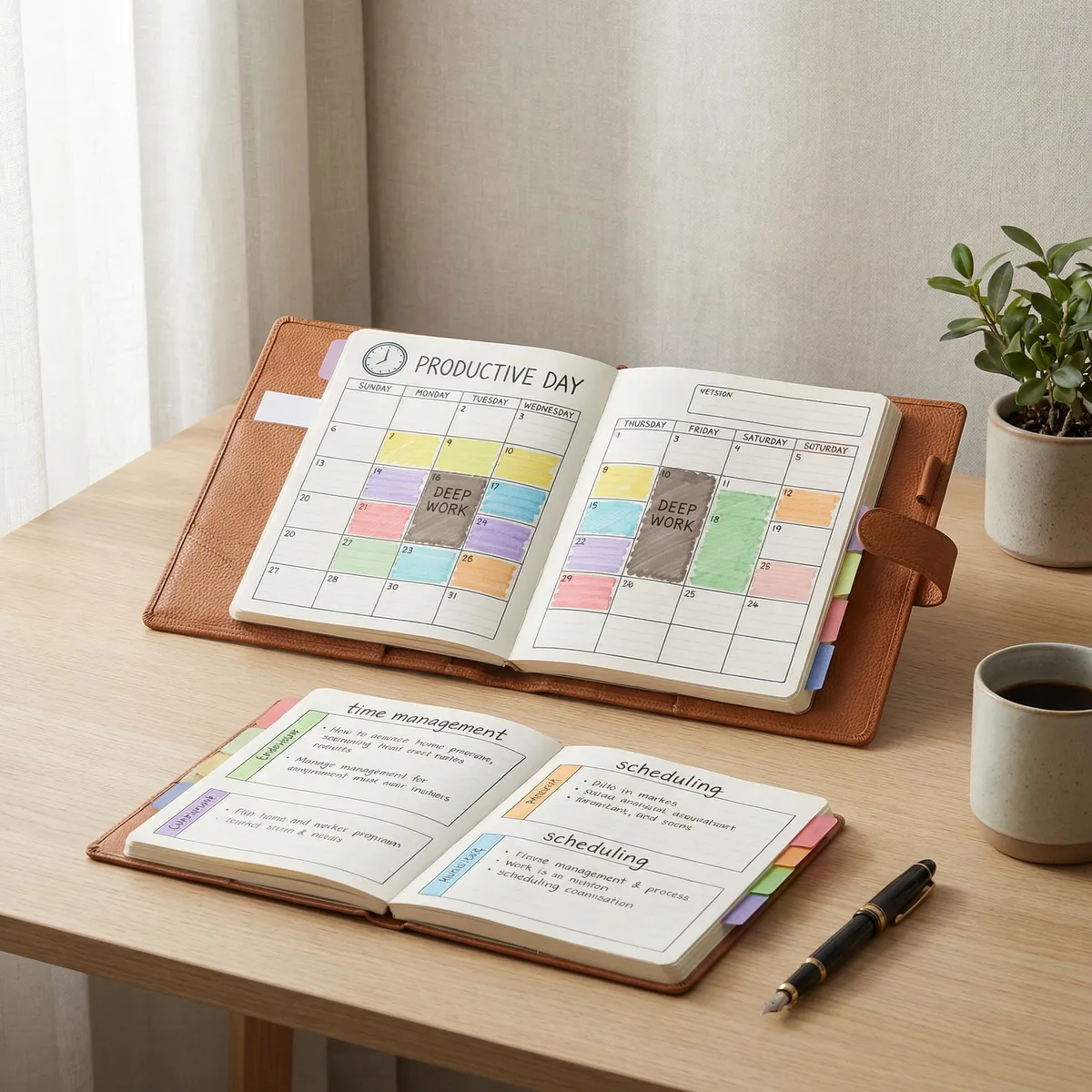
The average knowledge worker gets interrupted every 3 minutes and 5 seconds. By the time they return to their original task, it takes 23 minutes to refocus. That’s not a productivity problem. It’s a structural problem.
Time blocking addresses this. It’s a simple practice: divide your day into blocks of time, each dedicated to a specific task or type of work. Instead of keeping a to-do list and hoping you’ll get to everything, you schedule your tasks like meetings.
The difference is significant. A to-do list is passive—it’s a bunch of tasks that may or may not get done. A time-blocked calendar is active—it’s a commitment to yourself about what you’ll work on and when.
Cal Newport, a professor at Georgetown University, wrote a book called “Deep Work” where he argues that the ability to focus without distraction is becoming rare and valuable. Time blocking is one of the main strategies he recommends for creating the conditions to do that kind of work.
What Deep Work Actually Means
Deep work is just focused work on a cognitively demanding task. The kind of work that creates something new, improves your skills, or produces results you can point to.
Here’s why it matters: UC Irvine researchers found it takes an average of 23 minutes to return to a task after an interruption. When you’re constantly switching between tasks, you’re not just losing time to the interruption—you’re losing time to the recovery period after.
Deep work requires sustained concentration. Your brain needs time to enter a state of flow where complex problems become solvable and ideas come more easily. Getting into that state usually takes 15-20 minutes of uninterrupted focus, and it’s easily disrupted.
Time blocking creates space for deep work by protecting your focus time, eliminating the mental load of deciding what to work on, and reducing the temptation to check email or social media.
How to Start Time Blocking
Know Where Your Time Goes Now
Before you start blocking time, track how you spend your workday for one week. Be honest. Include everything: meetings, email, social media, breaks, and actual work.
You’ll probably find some surprises. Those “quick” email checks add up. Context switching fragments your day into pieces too small to use effectively.
This becomes the foundation for your time blocking. Once you see where your time goes, you can intentionally design how you want to spend it.
Block Your Fixed Commitments First
Every week has things that must happen at specific times. Meetings. Commute. Lunch. Exercise. Family stuff.
Block these first. They define the boundaries of your available time. Skip this step and you’ll over-schedule and set yourself up for failure.
Figure Out Your Peak Hours
Not all hours are equal. Most people have 2-4 hours when they’re at their mental best. For many, that’s morning. For others, it’s afternoon or evening.
Notice when you feel most alert and capable of complex thinking. Then protect those hours for your most demanding work.
Save lower-energy tasks—email, routine reports, administrative work—for times when you’re not at your peak.
Block Your Entire Day
Here’s the step most people skip. Time blocking only works when you schedule your whole workday, not just the “important” parts.
Open your calendar at the start of each week and block every hour. Yes, every hour. This might feel rigid, but that’s what makes it work. When everything is scheduled, you’re making intentional choices about how you spend your time instead of reacting to whatever seems urgent.
Your blocks should include deep work sessions, email and communication blocks, meetings, administrative tasks, planning time, and breaks.
How to Structure Deep Work Blocks
How Long Should Blocks Be?
For most people, 90-120 minute blocks work well. This gives your brain enough time to get into a flow state and accomplish meaningful work.
But if you’re new to this, don’t start with 2-hour blocks. Start with 60 minutes and extend as your focus capacity builds. Sustainable practice beats burnout.
Be Specific
Vague blocks like “work on project” invite procrastination. Specific blocks like “complete draft of introduction” are measurable and actionable.
For each block, define the exact task, the desired outcome, and how you’ll know when it’s done. This specificity eliminates decision fatigue. When your block starts, you know exactly what you’re doing.
Add Buffer Time
Don’t schedule blocks back-to-back. Leave 15-30 minutes between major blocks for overruns, context switching, unexpected interruptions, and mental decompression.
A schedule without buffer time assumes perfect execution and zero disruptions. That’s not realistic. Plan for reality.
Mistakes That Undermine Time Blocking
Scheduling Too Much
The biggest mistake is blocking more deep work hours than you can actually complete. If you’ve never done focused work before, don’t schedule 6 hours a day. Start with 2-3 hours.
Most people find they can only complete 50-70% of what they initially planned. Over-scheduling leads to discouragement and quitting.
Start small. Build the habit first.
Treating Blocks as Optional
Time blocking only works when you protect your blocks. Don’t let meetings creep in. Don’t check email during focus time. Don’t abandon a block because something more urgent came up.
That said, emergencies happen. When they do, reschedule rather than abandon. Move the deep work to tomorrow. Adjust your other blocks. Treat commitments to yourself like you’d treat commitments to others.
Ignoring Your Energy
If you’re naturally foggy in the afternoon, don’t schedule your most demanding work then. Pay attention to your energy patterns and schedule accordingly.
Skipping Review
Time blocking works better with daily planning and weekly review. Each morning, review your blocks and adjust if needed. Each evening, note what worked and what didn’t.
Weekly, evaluate: Are you protecting enough deep work time? Are your blocks sized right? What’s getting in the way?
This turns time blocking into a continuous improvement process rather than a rigid system that either works perfectly or fails completely.
Strategies That Make It Work Better
Theme Days
Some people find it helpful to assign themes to different days. Monday for meetings and planning. Tuesday and Wednesday for deep work. Thursday for email and admin. Friday for creative work.
Theme days reduce context switching because you don’t spend mental energy deciding what to work on—you just do the work planned for that theme.
Time Boxing Within Blocks
Inside your deep work blocks, consider adding time boxes: “45 minutes on this section, then evaluate.” This prevents perfectionism and Parkinson’s Law—the tendency for tasks to expand to fill available time.
Plan the Night Before
Spend 10-15 minutes each evening reviewing tomorrow’s blocks. Make adjustments. Ensure you have what you need for morning focus.
When you wake up, your day is planned. You don’t need to decide. You just follow the schedule.
What You Need
You don’t need special software. Google Calendar, Outlook, and Apple Calendar all work fine. The key is using your calendar consistently, not finding the perfect tool.
Some things help: color coding blocks (blue for deep work, red for meetings, yellow for email), setting calendar notifications before blocks start, and using focus apps that block distracting websites.
Building the Practice
Time blocking is a skill. Like any skill, it takes practice. Don’t expect perfection. Expect gradual improvement.
Try it for one week. Block your entire week in advance. Protect your deep work blocks. Review and adjust daily.
After a week, evaluate. What worked? What didn’t? Make changes and try again.
Most people who stick with time blocking for 30 days don’t go back to their old way of working. The clarity it creates is addictive.
Why It Matters
Time blocking won’t give you more hours. But it will give you control over the hours you have.
Instead of reacting to whatever seems urgent, you’ll be proactive about what’s important. Instead of hoping you’ll find time for meaningful work, you’ll schedule it. Instead of ending each day wondering where the time went, you’ll know exactly what you accomplished.
Advanced Time Blocking Patterns
Once you’ve got the basics down, these patterns can take your practice to the next level.
The90-Minute Focus Cycle
Research on ultradian rhythms suggests that our bodies operate in 90-minute cycles. Your natural alertness rises and falls throughout the day in these intervals.
Rather than fighting this biology, work with it. Structure your deep work in 90-minute blocks that align with your natural energy peaks. Take a genuine break between cycles—walk around, get some water, look at something far away.
This approach is different from arbitrary time chunks. You’re syncing your work with your body’s natural patterns, which makes focus easier and prevents burnout.
Energy-Based Scheduling
Beyond knowing your peak hours, track your energy levels throughout the day for several weeks. Note when you feel most alert, moderately energetic, and sluggish.
Map your tasks to your energy levels: complex strategic work during high energy, routine tasks during moderate energy, and administrative work during low energy.
This is more nuanced than just “peak hours.” Some people have multiple peaks, or a peak that shifts based on sleep, diet, or other factors. Fine-tuning your schedule to match creates more sustainable productivity.
The Weekly Preview
Beyond daily planning, spend 30-60 minutes each week doing a comprehensive preview. Look at the entire week ahead. Note deadlines, meetings, and commitments. Identify potential challenges and time constraints.
This weekly view helps you allocate deep work strategically. If you know Thursday afternoon is tight with meetings, schedule deep work earlier in the week. If next Tuesday is clear, protect that for priority projects.
The “No Meeting” Days
Many productive people designate certain days as meeting-free. Tuesday and Wednesday are common choices—these tend to be days when people have the most energy and fewest pre-weekend pressures.
Having a predictable meeting-free day makes planning easier and protects substantial focus time. When colleagues know they can’t book you on certain days, they work around it naturally.
Task Batching
Group similar tasks together in single blocks. Instead of scattering email throughout the day, process it in dedicated batches. Instead of handling all your administrative tasks individually, do them in one focused session.
Task batching reduces the overhead of context switching. Your brain doesn’t have to keep reorienting to different types of work. You develop momentum within each category.
The Shutdown Ritual
At the end of each workday, take 10-15 minutes to close out the day properly. Review what you accomplished. Note what’s pending. Plan tomorrow’s blocks if you haven’t already.
This ritual creates psychological closure. When you properly end your workday, you’re more able to relax and recharge—which improves your focus for the next day.
I use a simple checklist: review today’s blocks, check off completed tasks, update tomorrow’s schedule, and close all work applications. This signals to my brain that work is done for the day.
Handling Common Challenges
What About Unexpected interruptions?
Sometimes urgent things come up. A client needs something now. A colleague has a crisis. Your kid gets sick.
When these happen, handle them, then reschedule. The key is to reschedule, not abandon. Your deep work still matters—just push it to another time slot.
If interruptions are constant, you may need to examine why. Is your availability too open? Are you saying yes to too much? Sometimes the problem isn’t time blocking—it’s boundary setting.
How Do I Handle Procrastination?
Procrastination often comes from unclear next steps or fear of failure. Time blocking helps with both.
When your block says “write introduction paragraph” rather than “work on chapter,” you know exactly what to do. The task is specific and manageable.
If you still procrastinate, try the 5-minute start: commit to working on the task for just 5 minutes. Often, starting is the hardest part. Once you’re in motion, continuing is easier.
What If My Schedule Changes Constantly?
Some jobs have unpredictable demands. Client emergencies, market changes, or team issues can disrupt any schedule.
In these cases, build more flexibility into your blocks. Instead of scheduling every hour, leave larger gaps. Build “emergency buffer” time that can absorb disruptions.
Also, consider blocking time the night before rather than a week ahead. Shorter planning horizons work better for unpredictable schedules.
How Do I Deal With Meetings That Creep?
Meetings often expand to fill available time. If you block 30 minutes for a meeting that could take 15, you’ve created space that gets filled.
Be realistic about meeting duration. If a meeting typically takes 45 minutes, don’t block only 30 and hope for the best. Also, be willing to end meetings early when they’re done.
Some companies have “no-meeting afternoons” or “meeting-free hours.” If yours doesn’t, propose it. Protecting focus time benefits everyone.
Time Blocking for Different Work Styles
For Remote Workers
Remote work offers great flexibility but creates unique challenges. Without the natural boundaries of an office, work can expand to fill all available time—or you might struggle to focus without colleagues around.
Time blocking helps by creating structure. Your calendar becomes the replacement for the office’s built-in schedule. Block when you’ll be available for communication, when you’ll focus, and when you’ll take breaks.
Also, communicate your schedule to others. Let colleagues know when you’re in deep work mode and shouldn’t be interrupted.
For Office Workers
In an office, you deal with constant interruptions: colleagues stopping by, impromptu meetings, office noise.
Use your calendar to signal availability. When you’re in a focus block, use status indicators or physical signals (headphones, closed door) to discourage interruptions.
Also, talk to your manager about protecting focus time. Frame it in terms of business outcomes: you produce better work when you have uninterrupted time.
For Entrepreneurs
Entrepreneurs often juggle many roles and face constant demands. Time blocking is especially valuable because it forces prioritization.
When everything seems urgent, the calendar forces you to choose. You can’t do everything—so you have to decide what’s actually important.
Consider weekly theme days that align with business needs: sales, product development, operations, strategy. This helps ensure different areas of your business get attention.
For Employees With Heavy Meeting Loads
If your calendar is full of meetings, start by protecting even small blocks. Even 30 minutes of focused work is valuable.
Also, look for meetings you can decline or shorten. Often, we’re invited to meetings that don’t require our presence. Politely declining—or asking if your attendance is necessary—frees up time.
The Deeper Benefit
Here’s what surprised me about time blocking: it’s not really about productivity. It’s about intentionality.
When you block your time, you’re making choices about what’s important. You’re saying no to some things so you can say yes to others. You’re treating your time like the valuable resource it is.
This creates a sense of ownership over your work. Instead of feeling like your day happens to you, you start feeling like you’re directing your day.
That feeling—control over your time—is ultimately what makes time blocking sustainable. The productivity gains are nice. But the sense of agency is transformative.
Getting Started Today
You don’t need to plan everything perfectly. Here’s a simple way to start:
Tomorrow morning, before you check email or look at your phone, spend 15 minutes blocking your day. Start with your fixed commitments. Then add 2-3 blocks for focused work, even if they’re just 30-60 minutes each.
Protect those blocks. When someone asks for a meeting during focus time, suggest an alternative. When you’re tempted to check email, wait until your email block.
At the end of the day, notice how you feel. Did you accomplish more? Did you feel more in control?
That’s all it takes to start. One day. A few blocks. Then evaluate and adjust.
Most people who try this once become believers. The clarity is immediate. The control feels different. And the results speak for themselves.
Try it. Start small. Stay consistent. See what happens.