Most cleaning advice assumes you have hours to spend scrubbing your home. You don’t. You have twenty minutes a day, maybe less.
The secret isn’t cleaning more—it’s cleaning consistently. A home that gets quick daily attention rarely needs deep cleaning. The grimy buildup that makes weekends miserable? It never happens when you stay ahead of it.
This system takes twenty minutes each morning. It won’t make your home spotless for guests expecting a magazine photoshoot. But it will keep your space genuinely clean and livable without consuming your weekends.
The Philosophy: Prevention Over Cure
The best cleaning trick isn’t a trick at all. It’s not cleaning in the first place.
Wipe up spills immediately. Put things away when you’re done with them. Address messes before they become projects.
This feels obvious. But most people clean reactively—waiting until things visibly need it. The shift to preventative habits changes everything. You’re not cleaning anymore; you’re maintaining.
The Daily Twenty Minutes
Morning Routine (10 Minutes)
Start each morning with this quick sequence:
Make the bed. This single act transforms how your bedroom looks. It’s instant organization, and it takes sixty seconds.
Wipe bathroom surfaces. Keep disinfecting wipes in the bathroom. After your morning routine, give the sink and counter a quick swipe. This prevents soap scum and water spots from building up.
Do one load of laundry. Start it before work. By evening, it’ll be ready to fold. Nothing kills a cleaning routine like piles of unfolded clothes.
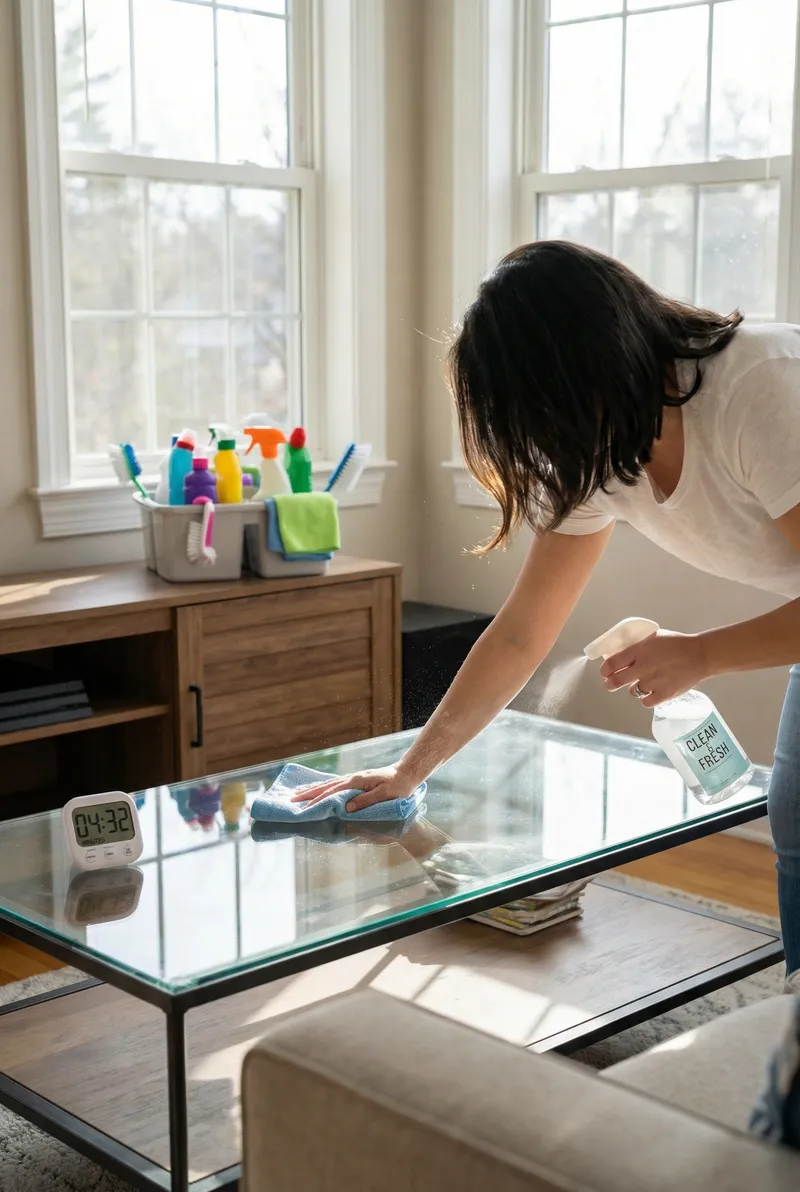
Spot-clean main areas. Notice something? Fix it now. A crumb on the counter gets wiped. A displaced cushion gets plumped. These micro-cleanings take seconds but prevent visual clutter.
Evening Routine (10 Minutes)
Before dinner, do this quick reset:
Kitchen wipe-down. After dinner, wipe the stove and counters. Clean as you cook—when you’re already using the sink, wash the dishes or load the dishwasher. Don’t let them pile up.
Visual reset. Walk through main rooms. Put away anything out of place. Straighten pillows. Fold blankets. The goal isn’t perfection—it’s preventing the “mess accumulates” spiral.
Prepare for tomorrow. Unload the dishwasher. Set out clothes for tomorrow. This isn’t cleaning, but it prevents tomorrow’s chaos.
The Weekly Deep Dive
Daily cleaning handles surface maintenance. Once a week, add these quick sessions:
Kitchen Deep Clean (30 minutes weekly)
Pick one day—traditionally Saturday morning—and focus here:
- Clean the stovetop while the oven is still cool
- Wipe down cabinet handles and appliance exteriors
- Sweep or vacuum the floor
- Take out trash and recycling
The secret: do this before the mess becomes visible. By cleaning weekly before buildup accumulates, each session stays short.
Bathroom Refresh (15 minutes weekly)
Same principle—consistent short sessions beat occasional marathons:
- Scrub the toilet (keep a brush and cleaner nearby)
- Wipe down the shower walls while you’re in it
- Clean the mirror and sink
- Wash or replace towels
This takes fifteen minutes if you do it weekly. It takes two hours if you do it monthly.
Room-by-Room Priorities
Not all rooms need equal attention. Match effort to reality:
High-Traffic Areas: Daily Micro-Cleaning
The kitchen, living room, and main bathroom get used constantly. These need daily attention—wiping counters, quick vacuuming, addressing spills immediately.
bedrooms: Less Frequent, More Thorough
Bedrooms accumulate less daily mess. Weekly sheet changes and dusting are enough. But don’t skip the daily bed-making—it hides a multitude of sins visually.
Low-Traffic Rooms: Weekly Check
Guest rooms, storage areas, and offices need attention once a week at most. A quick dust and floor vacuum prevents surprises when you actually need to use them.
The Secret to Not Burning Out
Lower Your Standards (Strategically)
This isn’t about living in filth. It’s about accepting that “clean enough” is often fine.
Your guests won’t notice the slight dust on your ceiling fan. They won’t judge the fingerprints at child-height on your walls. You notice these things because you’re looking. Others aren’t.
This frees mental energy for what actually matters: surfaces you touch, floors you walk on, air you breathe.
Clean in Order of Annoyance
When time is short, prioritize what bothers you most. Maybe it’s a clean kitchen sink. Maybe it’s made beds. Maybe it’s no visible dishes.
Identify your personal triggers. Protect those. Let the rest go until you have time.
Build Habits, Not Tasks
The power of this system is that these actions become automatic. You don’t decide to make the bed—you just do it. You don’t debate wiping the counter—it happens.
It takes about three weeks to build a habit. After that, it feels strange not to do these things. The resistance disappears.
What You’ll Actually Save
A consistent daily routine prevents:
- Weekend-long cleaning sessions
- The shame-avoidance cycle (not inviting people over because your home isn’t “ready”)
- Expensive deep cleaning services
- The stress of unexpected guests
The math works out: twenty minutes daily is about 2.5 hours weekly. That’s dramatically less than the four to six hours most people spend cleaning when they finally “get around to it.”
And your home stays consistently livable.
Making It Stick
Start Tomorrow, Not Monday
Don’t wait for the “right time.” Start tomorrow morning. Make the bed. Wipe the bathroom counter. Do one load of laundry.
The first week will feel awkward. You’re building new muscle memory. By week three, it’ll feel strange not to do these things.
Adjust to Your Life
This system works because it’s flexible. If mornings are impossible, do the routine at night. If you travel for work, do double sessions on home days.
The specific actions matter less than the consistency. Find what works for your schedule and stick with it.
Your home doesn’t need to be perfect. It just needs to be consistently maintained. Twenty minutes a day is all it takes.