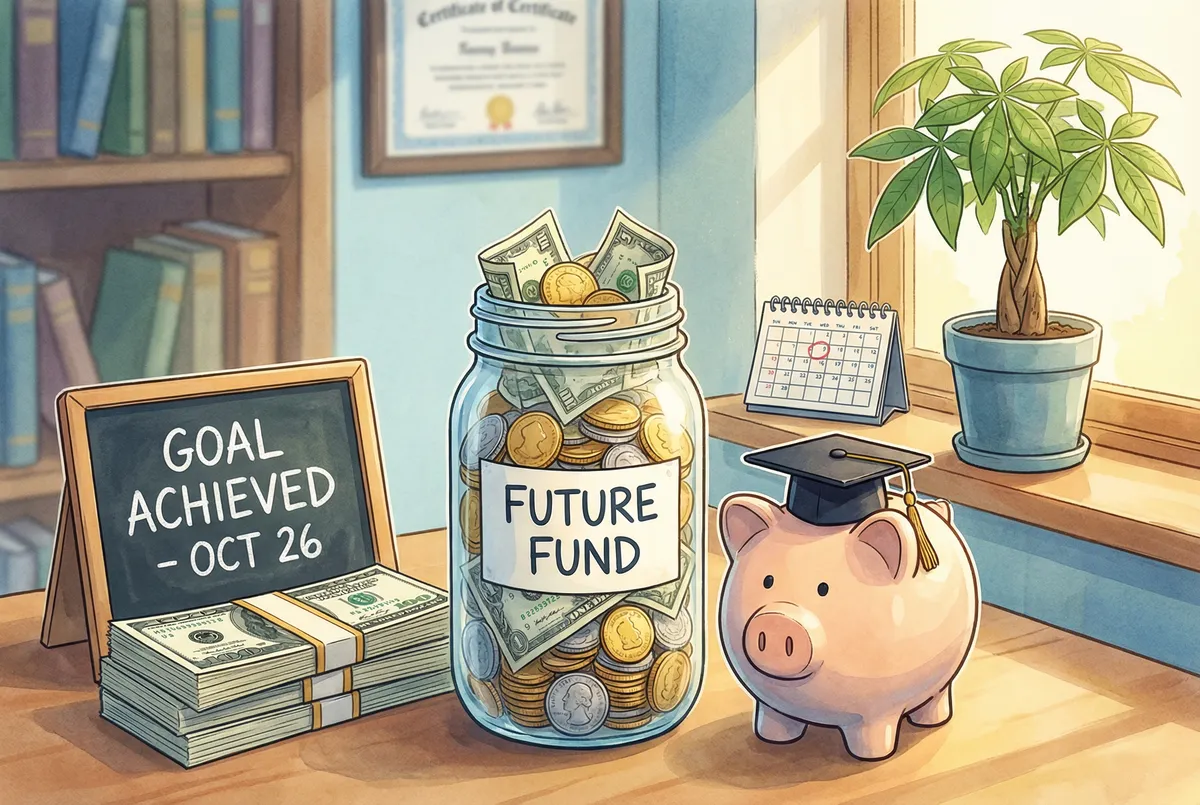
Most people know they should save money. The problem is that saving feels overwhelming. Whether you’re living paycheck to paycheck or simply not sure where to start, the traditional advice to “just save more” doesn’t help.
What if saving money didn’t require sacrifice? What if you could build a substantial savings account without noticing the impact on your daily life?
That’s exactly what the 52 Week Money Challenge offers. This simple, systematic approach to saving has helped millions of people accumulate over $1,000 in just one year.
How the 52 Week Money Challenge works
The concept is straightforward. You save a small amount of money every week, increasing the amount by a fixed amount each week throughout the year.
Week 1: Save $1 Week 2: Save $2 Week 3: Save $3 … Week 52: Save $52
By the end of the year, you’ll have saved $1,378. That’s enough for a reliable used car, three months of rent, a significant vacation, or a fully funded emergency fund.
The beauty lies in the progression. Starting with just $1 feels almost meaningless. By week 52, you’re saving $52 in a single week. But by then, your financial habits have evolved. You’ve spent 50 weeks building the discipline to save consistently.
Why this challenge works
Small starting amount removes mental barriers
Saving $1,378 all at once feels impossible. Saving $1 feels laughably easy. The 52 Week Challenge leverages this psychology by starting small enough that anyone can do it.
There’s no excuse not to start. You won’t miss $1. The challenge isn’t about the first week’s amount. It’s about building the habit.
Gradual increase builds financial discipline
Each week, you save slightly more than the week before. This gradual increase trains your brain to adjust to living on slightly less income. By the time you’re saving $20-30 per week, the previous amounts feel normal.
This systematic approach creates lasting change. Unlike dramatic budget overhauls that fail within weeks, this gentle progression becomes sustainable.
The mathematical certainty of success
Unlike investing, which carries risk, the 52 Week Challenge guarantees results. If you follow the schedule, you will have $1,378 at year-end. There’s no market volatility, no financial expertise required.
This certainty builds confidence. Many people who complete this challenge go on to bigger financial goals. They proved they could save, and that proof transforms their relationship with money.
Setting up for success
Choose your savings vehicle
Before starting, decide where the money will go. Here are the main options.
A high-yield savings account currently offers 4-5% APY. This keeps your money accessible while earning interest. The money grows while you save.
A regular savings account is simple and straightforward. While interest rates are lower, accessibility is maximum.
A certificate of deposit locks money away for fixed terms at higher rates. This is better if you won’t need the money during the challenge.
A separate account keeps challenge savings away from your regular spending. Out of sight, out of mind reduces temptation.
Automate your savings
The single most important success factor is automation. Set up automatic transfers to occur immediately after you receive income. This removes the decision to save each week. The money moves automatically.
Schedule the transfer for payday. If you’re paid bi-weekly, adjust the amounts accordingly. We’ll cover that later. The goal is making saving as effortless as paying any other bill.
Track your progress
Create a simple tracking system. A spreadsheet, a wall chart, or even a jar with paper slips. Choose whatever motivates you. Seeing progress visually reinforces the habit.
Some people share their progress publicly for accountability. Others prefer private tracking. Choose what works for your personality.
The complete 52 week schedule
Here’s the breakdown.
| Week | Amount | Cumulative Total |
|---|---|---|
| 1 | $1 | $1 |
| 2 | $2 | $3 |
| 3 | $3 | $6 |
| 4 | $4 | $10 |
| 5 | $5 | $15 |
| 6 | $6 | $21 |
| 7 | $7 | $28 |
| 8 | $8 | $36 |
| 9 | $9 | $45 |
| 10 | $10 | $55 |
| 11 | $11 | $66 |
| 12 | $12 | $78 |
| 13 | $13 | $91 |
| 14 | $14 | $105 |
| 15 | $15 | $120 |
| 16 | $16 | $136 |
| 17 | $17 | $153 |
| 18 | $18 | $171 |
| 19 | $19 | $190 |
| 20 | $20 | $210 |
| 21 | $21 | $231 |
| 22 | $22 | $253 |
| 23 | $23 | $276 |
| 24 | $24 | $300 |
| 25 | $25 | $325 |
| 26 | $26 | $351 |
| 27 | $27 | $378 |
| 28 | $28 | $406 |
| 29 | $29 | $435 |
| 30 | $30 | $465 |
| 31 | $31 | $496 |
| 32 | $32 | $528 |
| 33 | $33 | $561 |
| 34 | $34 | $595 |
| 35 | $35 | $630 |
| 36 | $36 | $666 |
| 37 | $37 | $703 |
| 38 | $38 | $741 |
| 39 | $39 | $780 |
| 40 | $40 | $820 |
| 41 | $41 | $861 |
| 42 | $42 | $903 |
| 43 | $43 | $946 |
| 44 | $44 | $990 |
| 45 | $45 | $1,035 |
| 46 | $46 | $1,081 |
| 47 | $47 | $1,128 |
| 48 | $48 | $1,176 |
| 49 | $49 | $1,225 |
| 50 | $50 | $1,275 |
| 51 | $51 | $1,326 |
| 52 | $52 | $1,378 |
Practical tips for sticking with it
Start on the first day of a month
Beginning on the 1st of a month aligns with most people’s budgeting cycles. Choose January 1st for the traditional fresh-start motivation, or any month’s first day for immediate action.
Find your $1
Where will your first dollar come from? Here are some options.
Loose change from a jar you’ve been saving works. Skipping one daily coffee purchase is another option. Selling an unused item around your house can kickstart the fund. Cashback from a recent purchase counts too. A small amount from your next paycheck works just as well.
The source doesn’t matter. What matters is starting.
Create reminders
Set calendar reminders for each week’s transfer. Better yet, set recurring weekly reminders that automatically move money. Technology makes this effortless.
Celebrate milestones
Acknowledge progress at quarter milestones. Week 13 is $91, one quarter complete. Treat yourself to something small. Week 26 is $351, halfway there. Reflect on your progress. Week 39 is $780, three-quarters complete. You’re nearly at $1,000. Week 52 is $1,378. Victory. Celebrate your achievement.
These celebrations maintain motivation throughout the year.
Don’t miss a week
If you miss a week, don’t give up. Simply add that week’s amount to the next week’s savings. The key is maintaining the habit, not achieving perfection.
Some people build a buffer by saving extra in early weeks, creating cushion for inevitable busy weeks later.
Variations and adaptations
Reverse 52 Week Challenge
Start with $52 in week one and decrease by $1 each week. This front-loads the savings, which works better for those expecting larger income later in the year.
Bi-weekly version
If you’re paid every two weeks instead of weekly, save double period. Week 1-2: save each bi-weekly pay $2, which is $1 per pay period. Week 3-4: save $4, which is $2 per pay period. Continue doubling through week 51-52: save $104, which is $52 per pay period.
This totals the same $1,378 but matches income timing.
Modified challenge
Can’t commit to $52 per week? Start smaller.
The $500 version starts at $1, increases by $0.50 weekly, ends at $26. Total is approximately $700.
The $2,000 version starts at $5, increases by $5 weekly, ends at $260. Total is approximately $6,900.
Adjust the math to fit your budget. The principle matters more than the exact amount.
Backwards challenge
Start saving $52 and decrease by $1 weekly. This is ideal if you expect expenses to increase later in the year or if you want more flexibility early in the challenge.
Common questions answered
What if I can’t afford to start?
Start with $0.25 or even $0.01. The goal is building the habit, not the amount. You can always catch up later or extend the challenge beyond 52 weeks.
What should I do with the money?
Prioritize in this order. First, build an emergency fund covering 3-6 months of expenses. Second, if you have high-interest debt, consider paying that first. Third, create a goal fund for vacation, car, or home down payment. Fourth, start investing once you have adequate emergency savings.
Is this enough for an emergency fund?
For many, $1,378 is an excellent starting emergency fund. It covers minor emergencies like car repairs or medical deductibles. Continue the challenge after completing it to build a more substantial cushion.
What if I get paid weekly?
The standard schedule works perfectly with weekly pay. If your pay varies, adjust the timing to match your income.
Can I do this with my partner?
Absolutely. Two people each completing the challenge creates $2,756 in annual savings. Consider doing it as a family competition or supporting each other as accountability partners.
Making it permanent
Completing the 52 Week Challenge changes your relationship with money. You’ve proven you can save consistently. Many find they want to continue the habit.
Options for continuing include starting a second round immediately, maintaining your final week’s savings rate which equals $2,704 per year, increasing savings by 50% across the board, or moving to more aggressive savings goals.
The discipline you build transfers to all financial goals. Retirement savings, investment accounts, and major purchases all become more achievable.
Your challenge starts now
You don’t need more money to start saving. You need a system. The 52 Week Money Challenge provides that system.
Tomorrow is the perfect day to begin. Set up your automatic transfer, track your progress, and watch your savings grow. In one year, you’ll look back at $1,378 you didn’t know you could save.
The hardest part is starting. Everything after that is repetition of a simple habit you’ve already proven you can build.