Most people think they’re good at grocery shopping. Then they check their bank statement and wonder where $800 went last month.
The average American household spends $779 per month on groceries. That’s $9,348 per year. Cut that by 25% and you’ve saved $2,337 annually. That’s a vacation. That’s an emergency fund. That’s real money.
Here’s what changed my grocery spending: I stopped shopping like everyone else. I stopped wandering aisles grabbing whatever looked good. I stopped buying ingredients for meals I’d never cook. I stopped throwing away food I forgot existed.
The Real Problem with Grocery Shopping
Most people fail at grocery shopping for three reasons:
Reason 1: No plan. You walk into the store without a list or with a vague idea of “healthy food” and end up with random ingredients that don’t make complete meals. Then you order takeout because you can’t figure out what to cook.
Reason 2: Shopping when hungry. Studies show hungry shoppers spend 64% more than those who shop after eating. You grab snacks, impulse buys, and things that look good but don’t fit your meal plan.
Reason 3: No system for using what you buy. You buy fresh produce with good intentions, then watch it rot in the crisper drawer. The USDA estimates Americans waste 30-40% of the food supply. That’s throwing money directly into the trash.
Fix these three problems and you’ll cut your grocery bill by 20-30% without eating worse food.
Start with Meal Planning
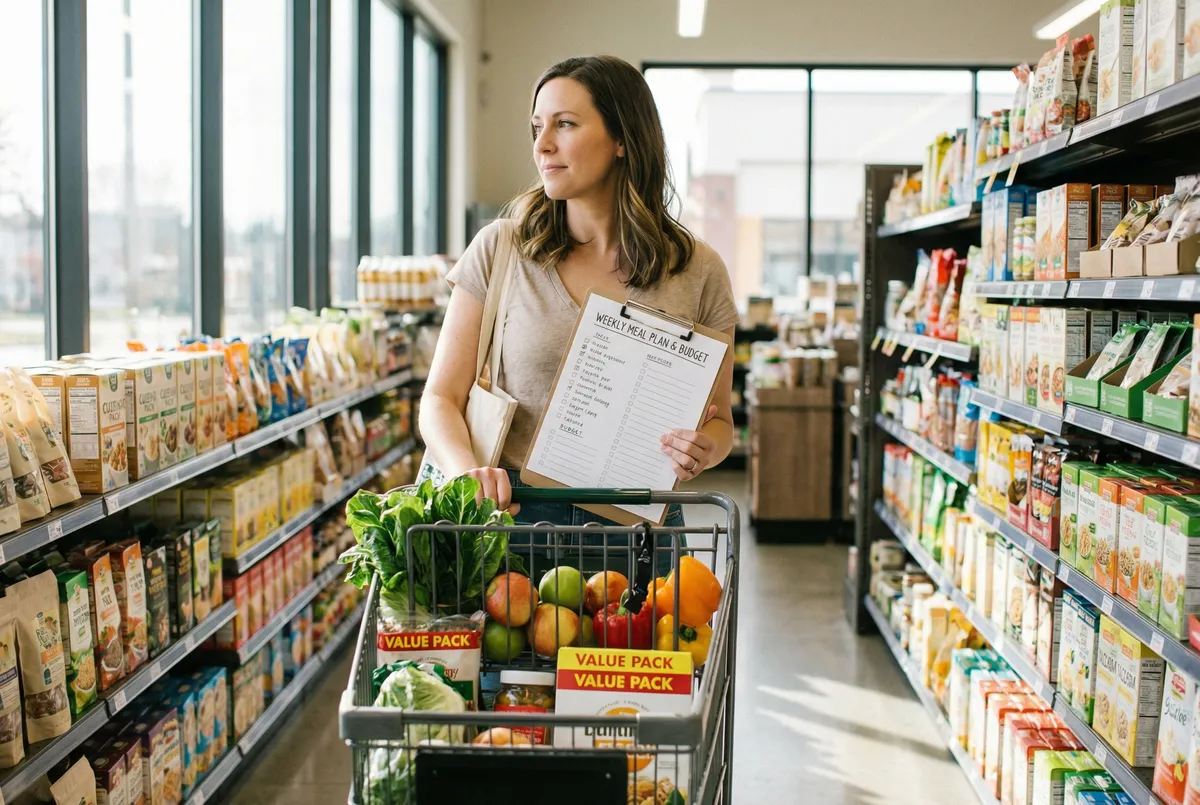
Before you set foot in a store, you need a plan. Not a Pinterest-perfect meal plan. A realistic plan for what you’ll actually eat this week.
The Sunday Planning Session (15 minutes)
Every Sunday, spend 15 minutes planning your week:
-
Check your calendar. How many dinners will you actually cook? Be honest. If you have evening commitments three nights, plan for three home-cooked meals, not seven.
-
Check your pantry and fridge. What do you already have? What needs to be used before it goes bad? Build meals around these items first.
-
Plan 3-5 meals. Not seven. Plan for 3-5 dinners you’ll cook, plus easy backup options (pasta, eggs, sandwiches) for busy nights.
-
Write your list. Only buy ingredients for planned meals plus breakfast, lunch, and snack staples.
Real example: My Sunday planning revealed I had chicken breasts, rice, and frozen vegetables. I planned three meals using those ingredients, added fresh items to complete them, and saved $40 by not buying redundant proteins.
The Meal Rotation Strategy
Don’t reinvent dinner every week. Develop a rotation of 10-15 meals you know how to cook, enjoy eating, and can make efficiently.
My rotation includes:
- Stir-fry (chicken, beef, or tofu with whatever vegetables are cheap)
- Sheet pan dinners (protein + vegetables roasted together)
- Pasta with various sauces
- Tacos or burrito bowls
- Soup or chili (makes leftovers)
This eliminates decision fatigue and ensures you always know what to buy. You’re not searching for new recipes every week. You’re shopping for familiar meals.
Batch Cooking and Leftovers
Cook once, eat twice (or three times). When you make dinner, make enough for leftovers.
The math: If you cook three dinners per week and each provides leftovers for one lunch, you’ve covered six meals with three cooking sessions. That’s 50% more efficient than cooking six separate meals.
What works for leftovers:
- Soups and stews (actually taste better the next day)
- Grain bowls (mix and match proteins, grains, vegetables)
- Pasta dishes
- Casseroles
- Roasted proteins (slice for sandwiches or salads)
Master the Store Layout
Grocery stores are designed to make you spend more. Understanding the layout helps you resist.
The Perimeter Strategy
Real food lives on the perimeter: produce, meat, dairy, bread. Processed food lives in the center aisles. Shop the perimeter first, then hit specific center aisles for pantry staples.
Why this works: You fill your cart with whole foods before encountering chips, cookies, and other impulse buys. When you do walk the center aisles, you’re shopping with purpose, not browsing.
The Eye-Level Trap
The most expensive brands sit at eye level. Cheaper options hide on top and bottom shelves. Always look up and down.
Example: Name-brand cereal at eye level costs $4.99. Store brand on the bottom shelf costs $2.49 for the same product. That’s a 50% markup for convenience.
The End Cap Illusion
End-of-aisle displays look like deals. They’re usually not. Stores place items there because they want to move inventory, not because they’re on sale.
Rule: If it’s not on your list and not actually on sale (check the price tag), skip it.
Smart Shopping Strategies
Buy Generic for These Items
Store brands are often made by the same manufacturers as name brands. Save 30-50% by buying generic:
- Flour, sugar, salt, baking soda
- Canned goods (beans, tomatoes, vegetables)
- Pasta and rice
- Frozen vegetables
- Dairy (milk, butter, cheese)
- Cleaning supplies
- Over-the-counter medications
What to buy name brand: Items where taste or quality matters to you personally. For me, that’s coffee, olive oil, and certain condiments. Everything else is generic.
Unit Price is Your Friend
Don’t compare package prices. Compare unit prices (price per ounce, pound, or count).
Example:
- 16 oz jar of peanut butter: $3.99 ($0.25/oz)
- 40 oz jar of peanut butter: $7.99 ($0.20/oz)
The bigger jar costs more upfront but saves $2 per jar. If you use peanut butter regularly, buy the bigger size.
Exception: Don’t buy bulk if you won’t use it before it expires. A deal isn’t a deal if you throw half away.
Seasonal Produce Saves Money
Produce costs fluctuate wildly based on season. Strawberries in December cost $6 per pound. Strawberries in June cost $2 per pound.
Strategy: Buy what’s in season and cheap. Adjust your meal plan based on what’s affordable this week.
Seasonal guide:
- Spring: asparagus, strawberries, lettuce
- Summer: tomatoes, corn, berries, stone fruits
- Fall: squash, apples, root vegetables
- Winter: citrus, cabbage, Brussels sprouts
Frozen Vegetables Are Not Inferior
Frozen vegetables are picked at peak ripeness and flash-frozen. They’re often more nutritious than “fresh” produce that’s been sitting in storage for weeks.
Cost comparison:
- Fresh broccoli: $2.99/lb (often waste stems)
- Frozen broccoli: $1.49/lb (all usable)
Frozen vegetables also eliminate waste. Use what you need, save the rest. No rotting vegetables in the crisper drawer.
The Meat Strategy
Meat is expensive. Here’s how to save without going vegetarian:
Buy whole chickens, not parts. Whole chickens cost $1.29/lb. Chicken breasts cost $3.99/lb. Learn to break down a chicken (YouTube has hundreds of tutorials) and save 67%.
Buy on sale, freeze immediately. When ground beef goes on sale for $2.99/lb instead of $4.99/lb, buy 5 pounds. Divide into 1-pound portions, freeze, and you’ve locked in the sale price.
Stretch meat with beans and grains. Tacos don’t need 1 pound of ground beef for four people. Use 0.5 pounds of beef plus 1 can of black beans. Same protein, half the cost.
Cheaper cuts work fine. Chicken thighs cost less than breasts and taste better. Pork shoulder costs less than pork chops and makes amazing pulled pork. Chuck roast costs less than sirloin and becomes tender when slow-cooked.
Reduce Food Waste
Throwing away food is throwing away money. The average family wastes $1,500 worth of food per year.
The FIFO System
First In, First Out. When you unpack groceries, move older items to the front and put new items in back. This ensures you use food before it expires.
The Eat-Me-First Bin
Designate one bin in your fridge for items that need to be used soon. Check it before cooking dinner. This prevents the “I forgot we had that” problem.
Proper Storage Extends Life
Herbs: Trim stems, place in a glass of water like flowers, cover loosely with a plastic bag. Lasts 2 weeks instead of 3 days.
Lettuce: Wash, dry completely, wrap in paper towels, store in a container. Stays crisp for 10 days.
Cheese: Wrap in parchment paper, then plastic wrap. Prevents mold and drying out.
Bread: Store in the freezer if you won’t use it within 3 days. Toast slices directly from frozen.
The Leftover Challenge
Once a week, have a “leftover night” where everyone eats whatever’s in the fridge. This clears out containers and prevents waste.
If you have random ingredients that don’t make a meal, make soup. Soup is the ultimate leftover solution.
The Shopping List System
A good list prevents impulse buys and ensures you get everything you need in one trip.
Organize by Store Section
Group items by where they’re located in the store:
- Produce
- Meat/Seafood
- Dairy
- Frozen
- Pantry staples
- Household items
This prevents backtracking and reduces time in the store (less time = fewer impulse buys).
The Never-Run-Out List
Keep a running list of staples you use regularly. When you open the last one, add it to your shopping list immediately.
My staples:
- Olive oil
- Garlic
- Onions
- Canned tomatoes
- Pasta
- Rice
- Eggs
- Milk
- Bread
Use Your Phone
Take a photo of your pantry and fridge before shopping. This prevents buying duplicates of items you already have.
When to Shop
Best day: Wednesday. Stores restock mid-week and new sales start. Fewer crowds than weekends.
Best time: Early morning or late evening. Fewer people, faster checkout, clearer thinking.
Worst time: After work when you’re hungry and tired. This is when impulse buying peaks.
The Price Book Strategy
For items you buy regularly, track prices across stores. This reveals which store has the best prices on what.
Example from my price book:
- Store A: Best for produce and meat
- Store B: Best for dairy and pantry staples
- Store C: Best for organic items
I shop Store A weekly, Store B every two weeks, and Store C monthly. This saves about $60/month compared to shopping one store for everything.
Common Mistakes to Avoid
Mistake 1: Shopping Multiple Stores Every Week
Unless stores are very close together, the gas and time cost more than you save. Pick one primary store, supplement with one other store every 2-3 weeks.
Mistake 2: Buying Pre-Cut Produce
Pre-cut vegetables cost 2-3x more than whole vegetables. A whole pineapple costs $3. Pre-cut pineapple costs $6. You’re paying $3 for 2 minutes of knife work.
Mistake 3: Ignoring Store Brands
“I only buy name brands” is costing you 30-50% more for identical products. Try store brands for one month. If you genuinely can’t tell the difference, keep buying them.
Mistake 4: Shopping Without Eating First
Eat before you shop. Every time. Hungry shopping leads to impulse buys and poor decisions.
Mistake 5: Buying Everything Organic
Organic is expensive. The Environmental Working Group publishes the “Dirty Dozen” (produce with high pesticide residue) and “Clean Fifteen” (produce with low residue). Buy organic for the Dirty Dozen, conventional for the Clean Fifteen.
Your First Month Challenge
Try this for four weeks:
Week 1: Start meal planning. Plan 3-5 dinners, make a list, stick to it.
Week 2: Add the perimeter strategy. Shop the edges first, then specific aisles.
Week 3: Switch 5 items to store brand. Compare quality and taste.
Week 4: Implement the FIFO system and eat-me-first bin to reduce waste.
After one month, calculate your savings. Most people save $150-250 in the first month just by implementing these basics.
The Real Secret
Smart grocery shopping isn’t about extreme couponing or eating ramen every night. It’s about being intentional.
Most people fail because they shop reactively. They wander the store, grab what looks good, and hope it turns into meals. Then they waste food, order takeout, and wonder why their grocery bill is so high.
You don’t need to sacrifice quality or variety. You need a plan, a system, and the discipline to stick to your list.
The goal isn’t a perfect grocery budget. The goal is spending less money on food without eating worse food. That’s achievable for anyone willing to plan ahead and shop strategically.