Walking into a grocery store without a strategy is like walking into a casino with no budget. The odds are against you, and you’ll likely leave poorer than when you arrived.
The average family spends $150-200 per week on groceries. That’s $7,800-10,400 per year. Implement even half of these strategies and you could save $500-1,000 annually. That’s a plane ticket, several car payments, or a substantial emergency fund contribution.
Here are 25 proven ways to slash your grocery bill while still eating well.
Planning and preparation
1. Create a weekly meal plan before shopping
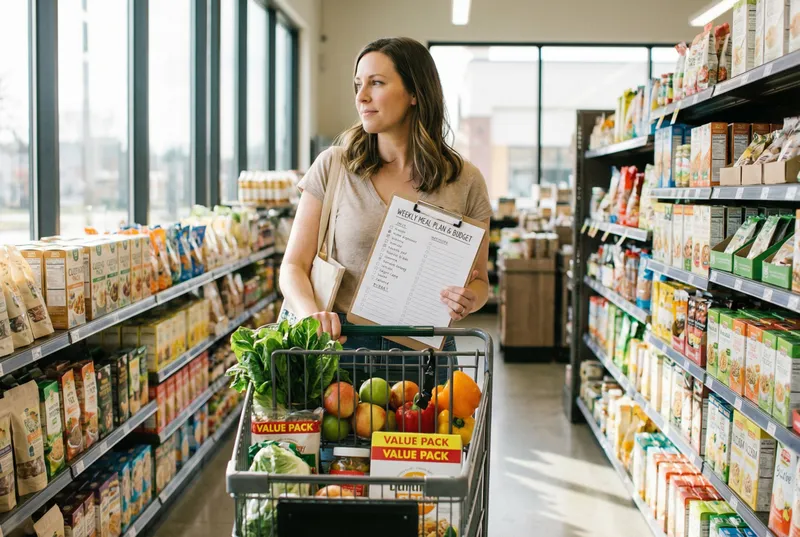
The foundation of saving money on groceries starts before you even enter the store. A solid meal plan prevents impulse purchases and ensures you buy only what you need.
Spend 15-20 minutes each Sunday mapping out dinners for the week. Base your plan on what’s already in your pantry, what’s on sale, and what fits your schedule. If Monday night is chaotic, plan a quick 15-minute meal. Save the elaborate cooking for when you have time.
2. Always shop with a list
Never enter a grocery store without a written list. This simple habit alone can save you 20-30% on every trip. When you shop with a list, you eliminate wandering and impulse buying.
Organize your list by store section to minimize backtracking. This reduces time in the store, which directly correlates with fewer impulse purchases. Stick to your list religiously, but allow flexibility for genuine sales on items you regularly buy.
3. Check your pantry first
Before making your shopping list, take inventory of what you already have. You’d be surprised how many ingredients for complete meals are already lurking in your pantry, waiting to be used.
Check expiration dates while you’re at it. Move older items to the front for immediate use. Build your weekly meals around ingredients you need to use before they expire. This prevents waste and saves money simultaneously.
4. Shop after eating
Never grocery shop when hungry. It’s not just advice, it’s biology. Studies consistently show hungry shoppers spend 64% more than those who shop after a meal. Your brain seeks high-calorie, processed foods when hungry, overriding your best intentions.
If you must shop after work, grab a small snack before entering the store. A handful of nuts or a piece of fruit can curb the urge to fill your cart with junk.
5. Set a budget and track spending
Determine how much you can realistically spend on groceries each week. Use a budgeting app or simply track your spending in a notebook. Review your totals weekly to stay accountable.
When you hit your budget, stop shopping. This discipline prevents the “I’ll just put this back” scenario at checkout. Many people find cash envelope systems helpful. Bring only the cash you’ve allocated for groceries.
Smart shopping strategies
6. Buy store brands
Store brands offer identical or nearly identical products at 25-40% lower prices. Major retailers use the same manufacturers as name brands, just with different packaging.
Safe store brand bets include pantry staples like flour, sugar, rice, pasta, canned beans, and frozen vegetables. You can also reliably buy store-brand butter, milk, and cheese. The only items worth paying more for are those where you can genuinely taste the difference.
7. Compare unit prices
Don’t judge a deal by the package price. Always check the unit price, usually displayed on the shelf tag below the product. This shows the cost per ounce, pound, or individual item.
Larger packages typically offer better value per unit, but only if you’ll use them before expiration. A cheaper per-unit price means nothing if half the product goes to waste.
8. Shop the perimeter first
Grocery stores are designed with intention. Fresh foods, produce, dairy, meat, and bakery, line the perimeter. Processed foods populate the center aisles. Shop the perimeter first to fill your cart with whole foods before encountering chips, cookies, and other impulse items.
When you do venture into center aisles, go with purpose. Get in and get out. Don’t browse aimlessly.
9. Look up and down, not straight ahead
The most expensive products sit at eye level. That’s prime real estate in retail. Cheaper options hide on top and bottom shelves. Develop the habit of looking up and down to find better prices.
This is especially true for cereals, condiments, and snacks. You might find the exact same product in identical size for half the price, just one shelf lower.
10. Ignore end cap displays
Those attractive displays at aisle ends look like amazing deals. Usually, they’re not. Stores place items there to move inventory or boost profitability, not to help you save money.
Check the actual price before buying. If it’s not on sale and not on your list, walk past it. End caps are designed to tempt, not to benefit your wallet.
11. Buy seasonal produce
Produce prices fluctuate dramatically by season. Strawberries in winter cost 2-3 times more than in summer. Asparagus in spring is a fraction of its off-season price.
Build your meals around what’s in season. Not only will you save money, but seasonal produce also tastes better. Learn the seasonal charts for your favorite fruits and vegetables to plan accordingly.
12. Choose frozen over fresh
Frozen vegetables are flash-frozen at peak ripeness, often making them more nutritious than “fresh” produce that’s traveled for weeks. They’re also significantly cheaper and eliminate waste since you use only what you need.
Frozen fruits work perfectly for smoothies and baking. The variety available in frozen sections rivals fresh options. When cost is a concern, frozen is almost always the smarter choice.
13. Buy whole vegetables and fruits
Pre-cut produce costs 2-3 times more than whole produce. You’re paying a premium for convenience that takes minutes to replicate. A whole pineapple costs $2-3. Pre-cut pineapple costs $5-6 for less quantity.
Invest in a good knife and learn basic cutting techniques. The savings add up quickly. For items like salad greens that do benefit from pre-washing, buy whole and wash yourself.
14. Purchase meat strategically
Meat is typically the most expensive part of the grocery bill. Here’s how to stretch that budget.
Buy whole chickens instead of pre-cut pieces. A whole chicken costs significantly less than breasts, thighs, and wings purchased separately. Learn to break it down yourself. The internet has countless tutorials. Use different parts for different meals throughout the week.
Buy family packs and divide into meal-sized portions for the freezer. This approach works for chicken, beef, and pork. When you see a good sale, stock up.
Consider cheaper cuts. Chicken thighs taste better than breasts and cost less. Pork shoulder makes incredible pulled pork for a fraction of pork chop prices. Chuck roast becomes tender and flavorful when slow-cooked.
15. Use meat as a flavoring, not the main event
Reduce meat portions and add bulk with beans, lentils, or grains. A pound of ground beef stretched with two cans of black beans makes twice the tacos for half the cost. This approach is healthier too, adding fiber and reducing saturated fat.
Soups and stews are perfect for stretching protein. A small amount of meat flavors a large pot of vegetables and grains. This technique has fed families economically for generations.
Reducing waste
16. Practice FIFO (first in, first out)
When unpacking groceries, move older items to the front and place new items in back. This simple habit ensures you use food before it expires.
FIFO works in the pantry, refrigerator, and freezer. It takes seconds to implement but prevents substantial waste over time. The average family throws away $1,500 in food annually. FIFO helps eliminate most of that.
17. Create an “Eat me first” bin
Designate a specific area in your refrigerator for items approaching their use-by date. Check this bin before planning dinner each day. You’ll be surprised how many random ingredients become meals when you’re intentional about using them.
This approach prevents the dreaded “we forgot we had this” scenario. That container of leftover chicken or half-used bell pepper becomes lunch instead of trash.
18. Store food properly
Proper storage extends food life significantly. Here are the essential tips that actually make a difference.
Leafy greens stay fresh longer when washed, dried, and wrapped in paper towels before refrigeration. Herbs last two weeks when trimmed and placed in a glass of water like flowers. Tomatoes ripen on the counter, not in the refrigerator. Bread freezes beautifully. Slice it before freezing for easy toast access.
19. Embrace leftovers
Cook once, eat twice. Making extra at dinner provides easy lunch the next day. This habit cuts meal preparation time in half and reduces food waste dramatically.
Plan for leftovers when meal planning. If you’re making roasted chicken, plan to use the leftover meat for sandwiches or salad the next day. Intentional leftover planning prevents random containers of forgotten food.
20. Have a weekly leftover night
Designate one evening per week as leftover night. Everyone eats what’s in the refrigerator. No cooking, no waste. This clears out containers and prevents food from being discarded after being forgotten.
Taking advantage of savings programs
21. Use cashback apps
Apps like Ibotta, Checkout 51, and Fetch Rewards give you money back on groceries. Most are free to use and pay out via PayPal or gift cards. The savings add up. Active users report $20-50 per month in rebates.
Scan your receipts after shopping. Claim rebates for products you bought anyway. With practice, you can save 5-10% automatically without thinking about it.
22. Join store loyalty programs
Most grocery stores offer free loyalty programs with exclusive deals and discounts. The points or cash back accumulate quickly. Some programs also offer personalized coupons based on your purchase history.
Download the apps for stores you frequent most. Check for digital coupons before every trip. This takes minutes and saves real money.
23. Use manufacturer coupons
Combine store sales with manufacturer coupons for maximum savings. Stack a store discount with a manufacturer’s coupon for sometimes 50-75% off. Many stores double coupons. Check your local retailer’s policy.
Find coupons in Sunday newspaper inserts, online coupon databases, and manufacturer websites. Some apps aggregate digital coupons for easy access.
24. Shop sales cycles
Grocery sales follow predictable cycles, typically 6-8 weeks. When staples go on sale, stock up. Track prices for items you buy regularly to learn when good deals occur.
Build your meal plan around what’s on sale each week. This flexibility saves money without sacrificing variety. The best savers learn to work with the sales cycle, not against it.
25. Consider discount grocery stores
Aldi, Lidl, and other discount grocers offer 30-50% lower prices than traditional supermarkets. The trade-offs include fewer choices, no loyalty programs, and bringing your own bags. These minor inconveniences translate to substantial savings.
Many people supplement their regular grocery shopping with discount stores for staples. Others do the majority of shopping at discount grocers and only visit traditional stores for items unavailable elsewhere.
Putting it all together
Start with three or four strategies that fit your lifestyle. Perhaps meal planning and store brands, or perhaps cashback apps and shopping the perimeter. You don’t need to implement all 25 strategies at once.
Pick the easiest changes first to build momentum. Once those become habits, add more strategies. Within a few months, you’ll wonder how you ever shopped any other way.
The goal isn’t perfection. It’s progress. Each small change adds up. Eventually, you’ll look at your grocery spending and see hundreds of dollars back in your pocket.
Remember: smart grocery shopping isn’t about deprivation. It’s about spending intentionally on food that nourishes you while cutting waste on food that doesn’t. Your wallet and your health will both benefit.