You stand in front of your closet every morning, staring at racks full of clothes, and still think “I have nothing to wear.” The problem isn’t your wardrobe. It’s how you organize it.
Color-coding your closet changes everything. I reorganized mine six months ago, and my morning routine went from 20 minutes of frustrated searching to 5 minutes of confident outfit building.
Why Color Organization Actually Works
Traditional closet organization groups clothes by type—shirts with shirts, pants with pants. This creates visual chaos and makes outfit coordination a mental puzzle.
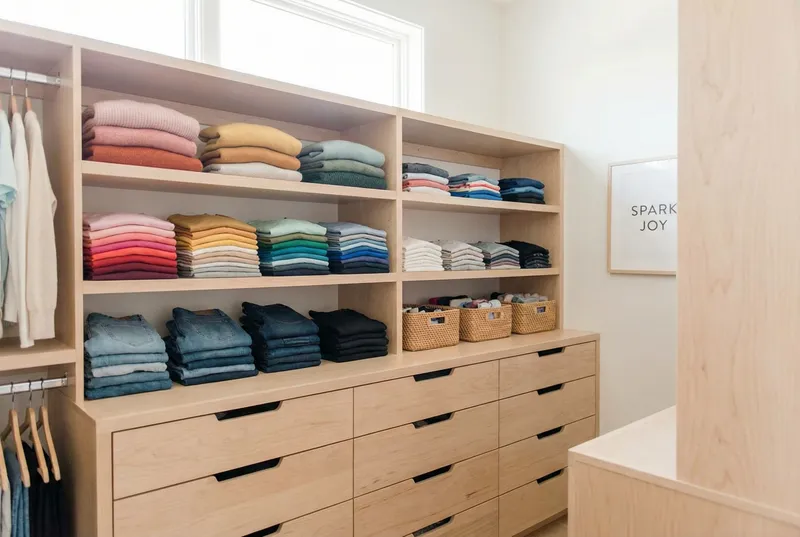
Color organization leverages how your brain processes visual information. When clothes are grouped by color, you immediately see coordination possibilities. That navy blazer next to your navy dress suggests a tonal outfit. The progression from light to dark blues shows exactly which pieces create sophisticated ombré effects.
This visual approach reduces decision fatigue. Your options become immediately apparent rather than requiring mental calculations about which pieces might work together.
Color organization also reveals wardrobe patterns more clearly. When you see five black sweaters hanging together, you understand your buying habits better than when they’re scattered among different garment types. This awareness leads to more intentional shopping.
The Rainbow Method: ROYGBIV Order
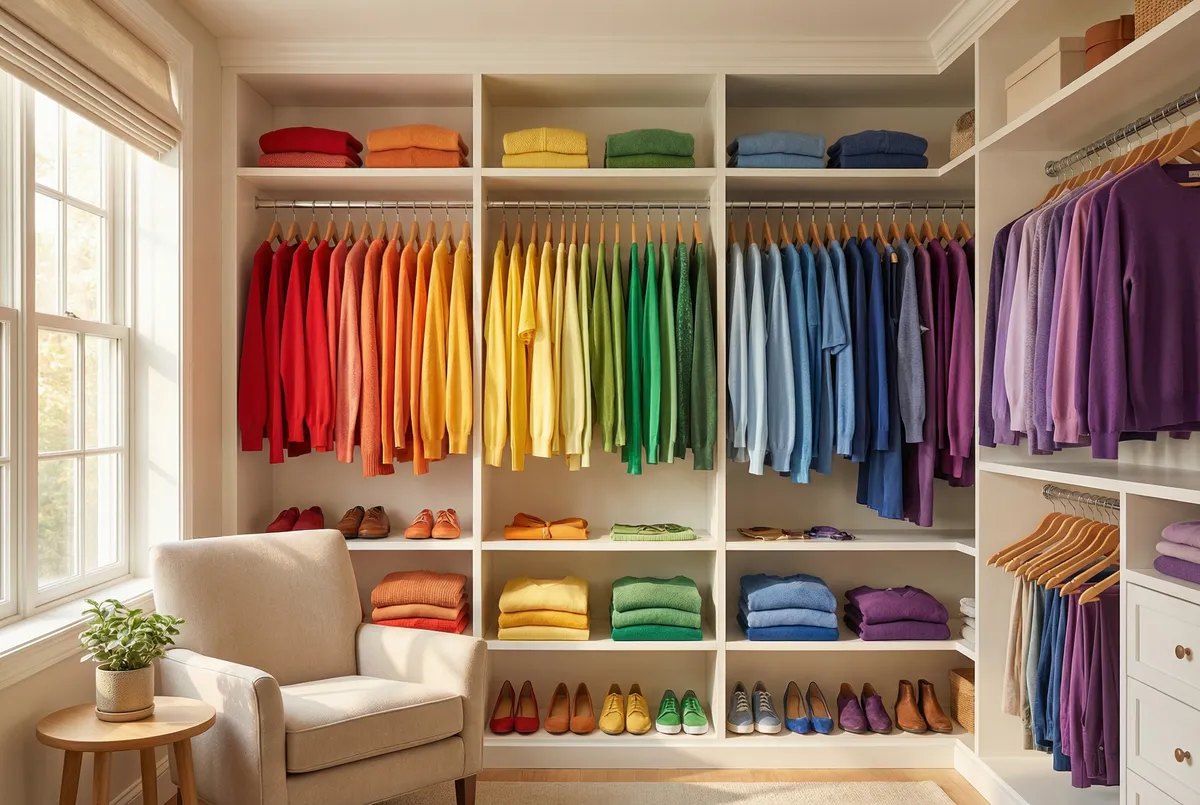
The rainbow gradient approach creates the most dramatic visual transformation. Arrange your wardrobe in spectral order from red through violet.
The classic sequence is ROYGBIV: Red, Orange, Yellow, Green, Blue, Indigo, Violet. This order follows the natural color spectrum and creates smooth visual transitions.
Start your rainbow with reds on the left, progressing through oranges, yellows, greens, blues, purples, and pinks. Within each color family, arrange pieces from lightest to darkest shades to create smooth transitions.
Coral pieces bridge the gap between red and orange. Teal items connect blue and green sections naturally. Trust your eye—if something looks out of place, it probably is.
Step-by-Step Implementation
Getting started is simpler than you think. The process takes a few hours but delivers years of benefits.
Empty and Sort by Type First
Clear out your entire closet. Spread everything across your bed or floor. This might seem overwhelming, but seeing all your clothes at once gives you a true picture of what you’re working with.
Sort by type first: shirts, pants, dresses, outerwear. This pre-sort makes color sorting much easier later. Create clear piles for each category.
While sorting, decide what stays and what goes. If you haven’t worn something in a year (and it’s not a special occasion item), consider donating it. Ask yourself: Have I worn this in the last 12 months? Do I feel good wearing it? Is it in good condition? Does it fit?
Choose Your Color Order
Decide what color pattern works best for you. Most people use ROYGBIV order, then add neutrals at one end.
I start with whites and creams, go through my rainbow, and finish with grays and blacks. If you wear darker clothing more often, consider swapping the order so those items are front and center.
Within each color, organize items from lightest to darkest. In a blue section, add light blue, then cobalt, then navy.
Pink is tricky because it doesn’t fall on the rainbow spectrum. Add peachy-hued pinks between red and orange clothes. Put rosier pinks before or after purple items.
Browns can be confusing too. Place darker tones near blacks and lighter tans near whites.
Handle Patterns and Prints
Patterns require special consideration since they contain multiple hues. The key is identifying dominant colors.
File patterned pieces according to their most prominent color. A navy dress with white stripes belongs in the navy section. A white shirt with small navy dots lives with white pieces.
Use multi-colored prints as natural bridges between solid color sections. A floral dress with pink, green, and cream can transition between your pink and green areas, creating visual flow.
Hold the item on a hanger away from you at arm’s length and squint your eyes. One color should pop out more than the others. That tells you exactly where to store it.
If you own many prints that you can’t be bothered to separate, create a section in your closet solely for those items. Then you only need to worry about keeping your solids color-coded.
Place Neutrals Strategically
Neutrals—black, white, navy, gray, camel, and cream—serve as organizational foundations that stabilize more vibrant color sections.
Position neutrals strategically throughout your closet rather than clustering them together. Use black pieces to separate bright color sections, creating visual breaks. White and cream pieces can bridge different color families. Navy serves as a sophisticated transition between cool and warm color zones.
Aim for neutrals to comprise about 60-70% of your wardrobe for optimal versatility, with colors making up the remaining 30-40%. This proportion ensures you can create outfits for any occasion while maintaining visual interest.
Room-Specific Adaptations
Different closet sizes and configurations need different approaches.
Small Closets
For closets with limited space, focus on your most-worn colors. If you rarely wear yellow, don’t dedicate prime hanging space to it. Store less-worn colors on higher shelves or in bins.
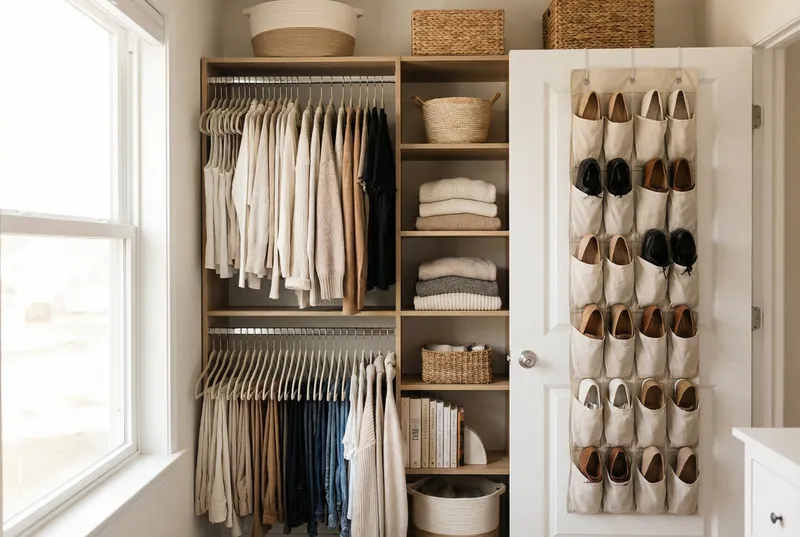
Use vertical space efficiently. Install a second hanging rod to double your capacity. Color-code both levels, keeping everyday items at eye level.
Walk-In Closets
Large closets allow for more elaborate color organization. Create distinct zones for different color families. Dedicate one wall to warm colors (reds, oranges, yellows) and another to cool colors (blues, greens, purples).
Use the center island or additional rods for neutrals, making them easily accessible from any direction.
Shared Closets
When sharing closet space, each person can maintain their own color-coded section. Use closet dividers to mark where one person’s wardrobe ends and another’s begins.
Alternatively, color-code the entire shared space together. This creates visual harmony and makes the closet feel more cohesive.
Lighting Makes the Difference
Accurate color perception requires proper lighting. Poor lighting undermines even the most thoughtfully organized color system.
Natural light provides the most accurate color representation. Position your closet organization to take advantage of windows whenever possible. North-facing windows provide the most consistent light throughout the day.
If your closet lacks windows, install LED strip lights with high Color Rendering Index (CRI) ratings above 90. These provide the most accurate color representation. Install strips both above hanging areas and below shelves to eliminate shadows.
Avoid fluorescent lighting. It creates green casts that make color coordination nearly impossible.
Daily Maintenance
Maintaining color organization requires developing new habits that preserve your system.
Develop a quick evening routine that returns items to their correct color positions. This takes less than two minutes when done consistently but prevents gradual system breakdown.
Keep a small laundry basket in your closet for items that need washing. This prevents worn clothes from disrupting your color organization.
When adding new pieces, immediately integrate them into your color system rather than hanging them randomly. Take a moment to find the perfect spot within the appropriate color family. This also helps you see how new purchases complement existing pieces.
Seasonal Adjustments
Seasonal color organization adapts your closet throughout the year, moving appropriate colors to prime real estate while storing off-season hues in less accessible areas.
During spring months, move pastels, bright colors, and light neutrals to eye-level hanging areas. These optimistic colors align with seasonal mood shifts. Store deep, rich colors higher or in harder-to-reach areas.
As seasons change, gradually shift earth tones, deep jewel colors, and rich neutrals to prominent positions. This doesn’t mean completely reorganizing your closet—simply adjust which colors get prime positioning.
Keep versatile neutrals always prominently placed. They work across all seasons and weather conditions.
Common Mistakes to Avoid
Even well-intentioned color organization can fail if you make these mistakes.
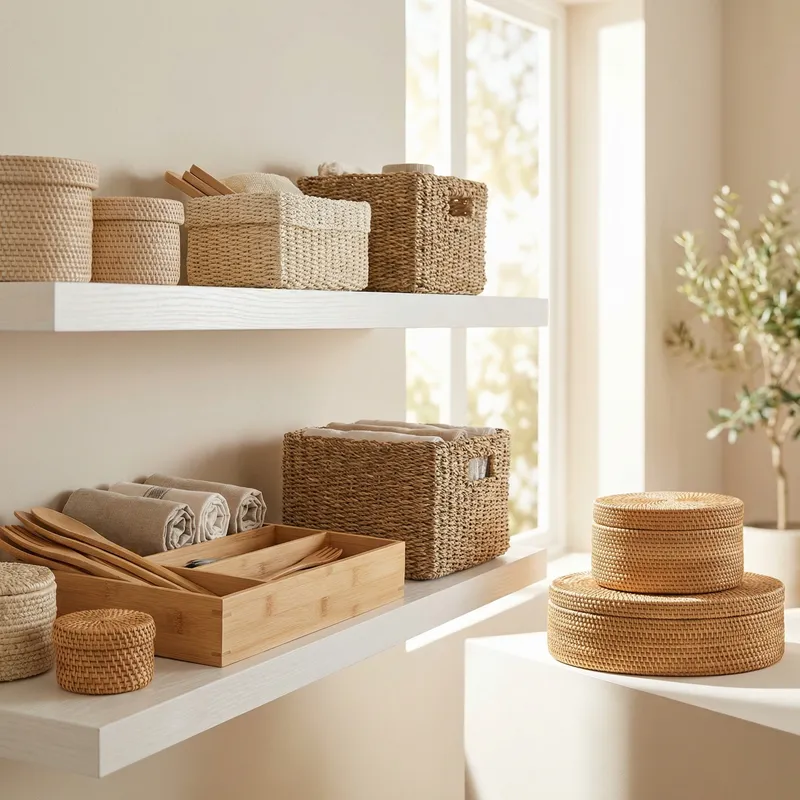
Don’t buy organizational items before creating a plan. Baskets and bins won’t automatically organize your closet. They can add clutter. Take inventory of what’s in your closet, declutter as necessary, and start paying attention to how you use your closet before purchasing organizers.
Don’t use mismatched hangers. Matching hangers aren’t just for looks—they help maximize storage space. Using consistent hangers throughout your closet creates a uniform look and ensures clothes hang properly.
Don’t store all your clothes in your closet year-round. Honor seasonality. The contents of your closet should reflect the current season only, making it look less cluttered and helping you more easily access the clothes you actually wear.
Don’t place closet rods too low. If rods are placed too low, clothes will bunch up and wrinkle. Make sure rods are spaced appropriately to allow for proper hanging.
Don’t put special-occasion clothing in the most accessible spots. Unless you attend black-tie events daily, there’s no reason to keep gowns or suits in prime real estate. Group clothes by frequency of use, not just by type.
Benefits Beyond Organization
Color-coded closets deliver benefits that extend beyond simple organization.
You’ll spend less money on duplicate purchases. When you can see all your navy sweaters together, you won’t accidentally buy another one.
Getting dressed becomes faster and more enjoyable. Your daily routine turns into a mood-boosting experience rather than a source of morning stress.
You’ll discover forgotten pieces hiding in your wardrobe. That green blouse you forgot about suddenly becomes visible when it’s grouped with other greens.
You’ll start mixing colors in new, creative ways. Seeing colors together suggests outfit combinations you might never have considered.
The visual beauty of a color-organized closet serves as daily motivation to maintain the system. Every morning feels like shopping in your own personal boutique.
Making It Stick
The best organization system is one you’ll actually maintain. Start with the method that feels most intuitive and exciting to you, then refine and adjust as you live with your new system.
If full rainbow organization feels overwhelming, start with just one section. Color-code your work clothes first, then expand to casual wear once you’re comfortable with the system.
Involve family members if you’re organizing shared spaces. Make sure everyone knows the color-coding system so they can help keep things organized.
Keep it simple. Don’t overcomplicate things. Start with a few colors and gradually expand as needed. The simpler the system, the easier it will be to maintain.
Consistency is key. Once you’ve set up your color-coded system, stick to it. Consistency helps you get the most out of this organization method.
Plan quarterly closet reviews that adjust color positioning based on seasonal needs and wardrobe changes. These sessions provide opportunities to relocate pieces that aren’t working in their current positions.
The Transformation
Color-based closet organization transforms daily dressing from a chore into a creative, inspiring process. Whether you choose dramatic rainbow gradients or strategic color family clusters, the key lies in selecting an approach that aligns with your wardrobe and lifestyle.
Your closet should spark joy every time you open its doors, not create decision fatigue before your day even begins. Color organization makes that possible.
Start with one section, one color family, one weekend afternoon. Experience the difference that visual organization makes in your daily life. The transformation extends beyond your closet—it changes how you think about your wardrobe and personal style.