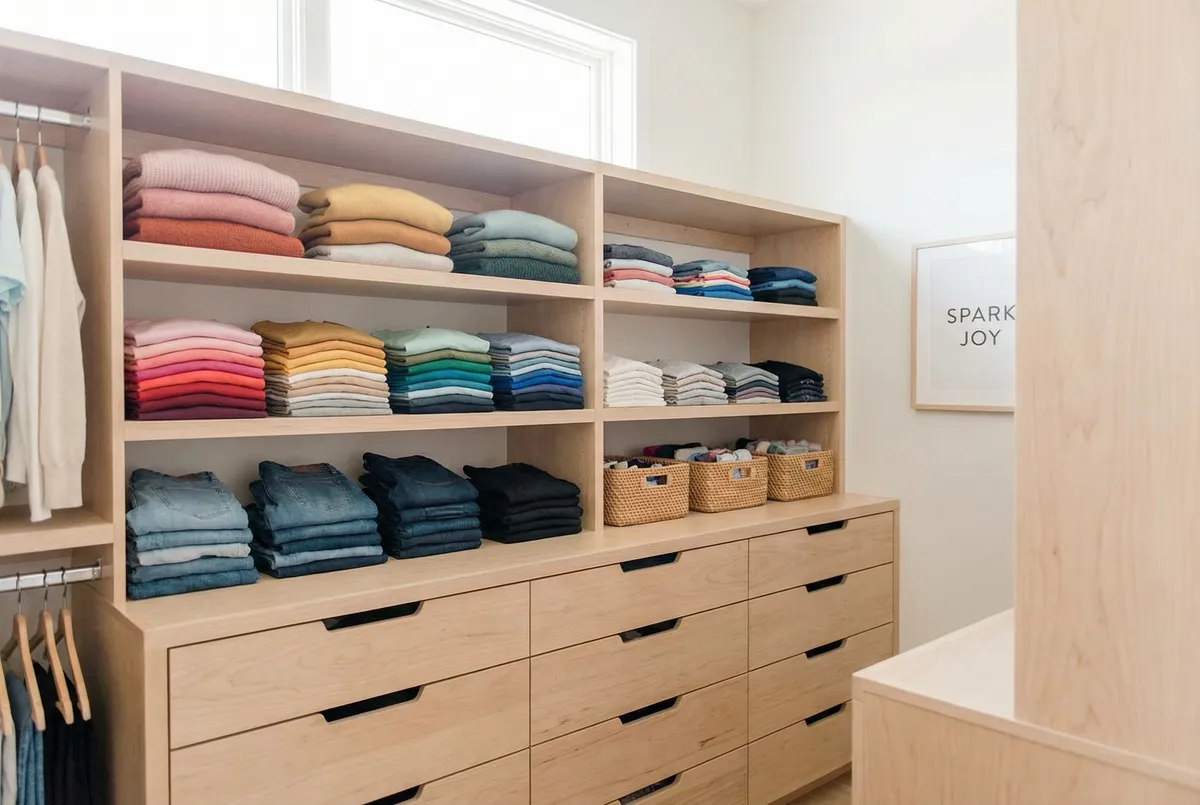
The clothes in your closet tell a story. Some pieces make you feel confident and alive. Others carry the weight of regret, aspiration, or simple forgetfulness. The KonMari Method transforms not just your closet, but your entire relationship with your belongings.
Developed by Marie Kondo, a Japanese organizing consultant, the KonMari Method has helped millions worldwide rediscover the joy of living with only items that spark joy. This isn’t about minimalism for its own sake or about discarding everything you own. It’s about surrounding yourself with things that genuinely matter.
Understanding the KonMari Philosophy
The KonMari Method differs fundamentally from traditional organizing approaches. Most decluttering methods ask you to decide what to discard. KonMari asks you to decide what to keep—specifically, what brings you joy.
This subtle shift in perspective changes everything. Instead of feeling guilty about what you’re throwing away, you feel excited about what you’re choosing to keep.
Why Joy Matters
When you hold an item and ask “Does this spark joy?”, you’re tapping into a powerful decision-making filter. Joy is immediate, visceral, and personal. It cuts through the rational arguments we make (“I might need this someday,” “I paid good money for this,” “Someone gave this to me”).
Items that spark joy serve you. They make your life better in some way—whether that’s comfort, confidence, function, or simply pleasant aesthetics. Items that don’t spark joy weigh you down, even if you can’t immediately articulate why.
The goal isn’t a closet full of expensive things. It’s a closet full of things you genuinely love.
The Six Basic Rules
Before diving into your closet, understand these foundational KonMari principles:
-
Commit yourself to tidying up. This isn’t a weekend project. It’s a transformation. Decide that you’re doing this and see it through.
-
Imagine your ideal lifestyle. What does your morning look like? How do you want to feel when you open your closet? Keep this vision in mind throughout the process.
-
Finish discarding first. Don’t organize until you’ve decided what stays. Otherwise, you’re just rearranging clutter.
-
Tidy by category, not location. Gather ALL your clothes from EVERYWHERE before you begin sorting. This is crucial.
-
Follow the right order. Clothes first, then books, papers, miscellaneous items (komono), and finally sentimental items. Clothes are the easiest category to start with.
-
Ask if items spark joy. This is your only criteria. Trust your instincts.
Step-by-Step: Decluttering Your Closet with KonMari
Phase 1: Gather Everything Together
The first step surprises most people. You’re not just organizing your closet—you’re gathering every piece of clothing you own from everywhere in your home.
Look in your closet, of course. But also check dressers, under the bed, garage storage, suitcases, coat closets, and anywhere else clothing hides.
This step often reveals exactly how much you have. People are consistently surprised—sometimes shocked—by the volume of clothing they’ve accumulated. This awareness is valuable. It shows you the scope of what you’re working with and why your closet feels overwhelming.
You might find clothes you forgot you owned. You might find items with tags still attached. You might find things that remind you of different life phases. All of this is normal and part of the process.
Phase 2: Hold Each Item
Now comes the core KonMari practice. Pick up each piece of clothing and hold it in your hands.
Here’s how to do it:
- Hold the item
- Close your eyes if it helps you focus
- Ask: “Does this spark joy?”
- Feel your body’s response
Joy isn’t always obvious. Sometimes it’s a warm glow in your chest. Sometimes it’s a sense of rightness. Sometimes it’s simply the absence of heaviness or resentment.
Non-joy shows up as guilt (“I spent so much money on this”), obligation (“My mother gave this to me”), fear (“I might need this someday”), or heaviness when you think about wearing it.
Trust yourself. Your first instinct is usually correct. If you’re uncertain, put the item in a “maybe” pile and come back to it later. But move quickly—lingering too long usually means you’re trying to rationalize keeping something that doesn’t truly bring you joy.
Phase 3: Thank and Release
For items that don’t spark joy, the KonMari Method includes a simple but powerful practice: thanking the item before letting it go.
We often feel guilty about discarding gifts, expensive purchases, or items we’ve owned for years. Thanking these items releases that guilt.
You might say (or think):
- “Thank you for serving me.”
- “Thank you for the experience.”
- “I’m releasing this with gratitude.”
This isn’t required—Marie Kondo herself notes that you can simply discard items that don’t bring joy. But many find this practice surprisingly emotional and freeing.
Phase 4: Organize What Remains
Once you’ve decided what stays, it’s time to organize. The KonMari Method has specific approaches for clothing that differ from conventional wisdom.
The KonMari approach emphasizes folding over hanging. Why? Folding allows you to see everything at once, prevents clothes from getting wrinkled, and saves tremendous space.
Here’s the vertical fold technique:
- Fold sleeves inward toward the center
- Create a long rectangle
- Fold in thirds lengthwise
- Fold from bottom into thirds (or quarters for smaller items)
- Store vertically, not stacked
Every item should stand upright in your drawer. When you open your drawer, you should see the full face of every folded item—no stacking, no buried clothes.
This makes finding items easy and prevents the “out of sight, out of mind” problem that leads to forgotten clothes and redundant purchases.
Phase 5: Assign a Home
Every item that stays needs a designated place. This is non-negotiable in the KonMari Method.
If something doesn’t have a home, it becomes clutter—even if you love it. Without a designated spot, items migrate to chairs, floors, and piles.
Here’s how to assign homes:
- Group similar items together
- Keep frequently worn items easily accessible
- Designate special places for special occasion items
- Ensure every item can return to its home easily
Daily wear goes in easy access, eye level locations. Seasonal items go on higher or lower shelves. Special occasion items go in separate, clearly labeled storage.
The Art of Folding: Detailed Instructions
KonMari folding is a skill that takes practice but transforms drawer storage once mastered.
Basic T-Shirt Fold
- Lay the shirt flat, front side down
- Fold one side in about one-third
- Fold the sleeve back over the edge
- Repeat on the other side
- Fold the bottom third up
- Fold the top third down
- Fold in half (or thirds) to create a vertical rectangle
- Store standing up
Pants Fold
- Lay pants flat, front side down
- Fold one leg over the other at the knee
- Fold in half (or thirds) lengthwise
- Fold from the bottom into thirds
- Store vertically
Sweater Fold
- Lay sweater flat, front side down
- Fold sleeves inward
- Fold bottom up to create a rectangle
- Fold from bottom into thirds
- Store vertically
Sock and Underwear Fold
Socks fold in thirds, then in half. Store standing or in small bins. Underwear folds into small rectangles. Store standing in a divided container.
The Drawer Test
After folding, open your drawer and look down at it. You should see the full surface of every folded item—no stacking, no items hidden beneath others.
If you can see only the top layer, you’re stacking. If items fall over when you remove one, you’re stacking. Fix this by refolding and storing vertically.
Maintaining Your KonMari Closet
The work doesn’t end once your closet is organized. Maintenance determines long-term success.
The One-Touch Rule
When you take something off, put it back where it belongs immediately. Don’t drape it over a chair. Don’t toss it on the bed. Hang it up or put it in the hamper.
This simple rule prevents the clothing piles that destroy organization.
Daily Hanger Check
Every evening, glance at your hanging clothes. Notice which hangers remain empty. These represent clothes you’re not wearing.
If an empty hanger sits for more than a few weeks, ask yourself why. The item might not spark joy anymore. It might need alterations. It might be wrong for your current lifestyle.
Seasonal Rotation
Twice yearly, do a quick pass through your closet:
- Remove seasonal items (winter coats in spring, swimsuits in fall)
- Store them properly using vacuum bags or boxes
- Bring current-season items to accessible locations
- Notice what you didn’t wear last season—consider releasing those items
The New Item Rule
When you buy something new, something must go. This maintains your closet at a manageable size and forces you to consider whether new purchases are truly worthwhile.
Weekly Reset
Spend 10-15 minutes weekly keeping your closet in order:
- Rehang anything that fell
- Return items to their designated spots
- Straighten folded piles
- Check for items that need to go to the laundry or dry cleaning
Common Mistakes and How to Avoid Them
Mistake 1: Starting with Organization
Don’t buy organizers, bins, or fancy hangers before decluttering. You don’t know what you need until you know what you’re keeping.
After you’ve finished the KonMari process, you’ll have a clear picture of what organizational tools actually serve you.
Mistake 2: Keeping “Someday” Clothes
“I might wear this someday” is the enemy of joy. Someday rarely comes. If you haven’t worn it in the past year, it probably doesn’t spark joy—regardless of whether it fits, cost money, or was a gift.
Mistake 3: Doing It All at Once
The KonMari Method is intense. Trying to declutter your entire home in one session leads to burnout and incomplete work.
Focus on clothes first. Get comfortable with the process. Then move to other categories.
Mistake 4: Involving Others’ Opinions
This is your joy, not theirs. Don’t ask family members whether you should keep items. Don’t let others’ preferences override your own feelings.
Your relationship with your belongings is personal. Trust yourself.
Mistake 5: Feeling Guilty About Money
The money is already spent. Keeping an item you don’t love doesn’t recover that money—it just maintains your connection to that spending.
Letting go frees you. Holding on punishes you.
Mistake 6: Not Folding Vertically
Vertical storage is fundamental to KonMari. It works. But it requires learning a new skill.
Invest the time to master the folding technique. The results are worth the effort.
The Emotional Journey
Decluttering with the KonMari Method often triggers unexpected emotions.
You might experience shock at how much you own, guilt about discarding gifts or expensive items, grief over letting go of clothes from past life phases, relief as items leave your life, joy when you hold items that truly matter, pride in your organized space, or excitement about getting dressed each morning.
All of these are normal. Let yourself feel them without judgment.
Some people cry during this process. That’s okay. Clothes often carry emotional weight—we wear them to job interviews, first dates, difficult moments. Letting go of certain pieces can feel like letting go of who we were.
This is actually the point. The KonMari Method isn’t just about organizing. It’s about defining who you are now and who you want to become.
When You Finish
After completing the KonMari process, people report remarkable changes:
Getting dressed becomes enjoyable, not stressful. You wear more of what you own instead of the same few pieces. You buy less because you recognize what truly brings you joy. Your closet feels calm, peaceful, and beautiful. You understand your personal style more clearly. You feel lighter, less burdened by possessions.
The goal isn’t a minimalist closet with 10 items. The goal is a closet full of things you genuinely love—and nothing you don’t.
Your Next Steps
Ready to transform your closet with the KonMari Method? Here’s your action plan:
This week: Set aside 2-3 hours for the initial sort. Clear your schedule and commit to the process. Find a space to lay out all your clothes.
During the sort: Hold each item and ask “Does this spark joy?” Create three piles: keep, discard, undecided. Thank items you’re releasing. Take breaks if you need them.
After the sort: Learn the vertical folding technique. Assign a home to every item that stays. Appreciate your transformed closet. Maintain with daily habits.
Going forward: Practice the one-touch rule. Use the one-in, one-out rule for new purchases. Do seasonal rotations. Notice how your relationship with clothing changes.
Your organized, joyful closet awaits. The process might be emotional. It will almost certainly be worthwhile.
What sparks joy for you? Start there. Everything else can go.