Your closet isn’t too small. You’re just not using it right.
Most people look at a cramped closet and think they need more space. What they actually need is a better system. The average closet wastes up to 50% of its potential storage capacity, mostly in vertical space that goes completely unused.
Here’s what changed everything for me: stop thinking about floor space and start thinking about wall space. Stop hanging everything and start organizing by category. Stop buying more storage bins and start using what you already have more intelligently.
The Real Problem with Small Closets
Small closets fail for three reasons:
Reason 1: Single hanging rod syndrome. Most closets come with one rod at 66 inches high. This leaves 18-24 inches of wasted space above and 40+ inches of wasted space below short items like shirts and folded pants.
Reason 2: Dead zones everywhere. The back of the door sits empty. The top shelf becomes a dumping ground. Corners turn into black holes where things disappear. Floor space gets cluttered because there’s nowhere else to put shoes.
Reason 3: No system. You shove things wherever they fit instead of organizing by category, frequency of use, or season. This creates chaos that makes a small space feel even smaller.
Fix these three problems and you’ll double your usable space without expanding the closet by a single inch.
Start with Brutal Decluttering
Before you buy a single organizer, you need to remove everything that doesn’t belong.
The One-Year Rule
If you haven’t worn it in 12 months, it goes. No exceptions for “someday” clothes, “maybe I’ll fit into this again” jeans, or “I paid too much for this” items that don’t fit your current life.
Pull everything out. Make four piles:
- Keep - Worn in the last year, fits now, matches your current lifestyle
- Donate - Good condition but you don’t wear it
- Seasonal storage - Winter coats in July, swimsuits in January
- Trash - Damaged, stained, or beyond repair
Real numbers: When I did this with my 5-foot reach-in closet, I removed 47 items. That’s 47 hangers freed up, 12 inches of shelf space cleared, and 8 pairs of shoes gone. The closet instantly felt twice as large.
Questions to Ask Every Item
- Does it fit right now? (Not “will it fit if I lose 10 pounds”)
- Have I worn it more than once this year?
- Would I buy it again today at full price?
- Do I have something similar that I wear more often?
If the answer is no to any of these, the item leaves your closet.
Move Seasonal Items Out
Winter coats don’t need prime real estate in summer. Bulky sweaters can live elsewhere during warm months. Store off-season items in under-bed boxes, high shelves in other closets, or vacuum-sealed bags in the garage.
This rotation keeps your closet focused on what you’re actually wearing right now.
Master Vertical Space
The secret to small closet organization is thinking up, not out.
Install a Second Hanging Rod
This is the single highest-impact change you can make. A second rod instantly doubles your hanging capacity for shirts, blouses, and folded pants.
The setup:
- Upper rod at 80-84 inches (for shorter items or seasonal pieces)
- Lower rod at 40-42 inches (for daily wear)
- Minimum 3 inches clearance between hanging clothes
This configuration works because most of your clothes are short. Shirts, blouses, folded pants, and skirts don’t need 66 inches of vertical clearance. They need 30-35 inches.
What goes where:
- Upper rod: Seasonal items, less frequently worn pieces, or items you’re storing temporarily
- Lower rod: Daily essentials, work clothes, frequently worn items
If you can’t install a second rod, use a closet doubler rod that hangs from your existing rod. These adjustable rods cost $15-20 and require zero installation.
Extend Shelving to the Ceiling
That gap between your top shelf and the ceiling is wasted space. Install additional shelving all the way up to maximize storage without expanding the closet’s footprint.
Shelf spacing guide:
- 10-12 inches apart for shoes and accessories
- 12-14 inches apart for folded clothes
- 14-16 inches apart for bulky items like sweaters
Keep everyday items between 30 and 65 inches high (easy reach zone). Reserve top shelves for seasonal items, rarely used pieces, or storage bins you only access a few times per year.
Pro tip: Use a small folding step stool that hangs on a wall hook. This makes high shelves accessible without taking up floor space.
Use the Full Height for Hanging
If you have high ceilings and mostly long items (dresses, coats), install your single rod higher than standard. Position it at 72-78 inches to create usable shelf or drawer space underneath.
Then add a small dresser, shoe rack, or drawer tower on the floor below. This captures the vertical space that would otherwise sit empty.
Organize by Category and Frequency
Random organization creates chaos. Strategic organization creates calm.
The Category System
Group similar items together:
- Tops: Shirts, blouses, t-shirts
- Bottoms: Pants, jeans, skirts
- Dresses: Short and long
- Outerwear: Jackets, coats, blazers
- Accessories: Belts, scarves, bags
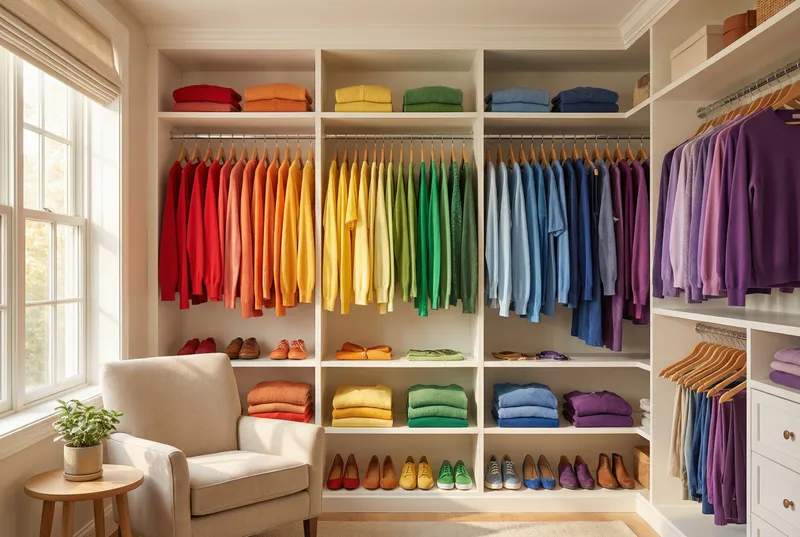
Within each category, organize by color or type. This makes getting dressed faster because you can see all your options at once.
The Frequency Zones
Place items based on how often you wear them:
Eye level (48-65 inches): Daily essentials, work clothes, frequently worn items. This is prime real estate. Don’t waste it on things you wear twice a year.
Above eye level (65+ inches): Seasonal items, special occasion pieces, rarely worn clothes. These can be harder to reach because you don’t need them often.
Below waist (30-48 inches): Pants, skirts, shoes, bags. Items you need to see clearly but don’t need at eye level.
Floor level: Shoes, boots, bags, or a small dresser/drawer unit.
This system ensures you never struggle to reach the things you use most.
Smart Storage Solutions That Actually Work
Slim Velvet Hangers
Switch from bulky plastic or wooden hangers to slim velvet hangers. This single change adds 20-30% more hanging capacity.
The math: Standard plastic hangers are 0.5 inches thick. Slim hangers are 0.25 inches thick. In a 5-foot closet, that’s the difference between 120 hangers and 160 hangers.
Velvet coating prevents clothes from sliding off, which means you can hang items you’d normally fold (like tank tops or silky blouses).
Cost: $20-30 for a 50-pack. Worth every penny.
Over-the-Door Organizers
Your closet door provides 96 inches of vertical storage space that most people completely ignore.
Best uses:
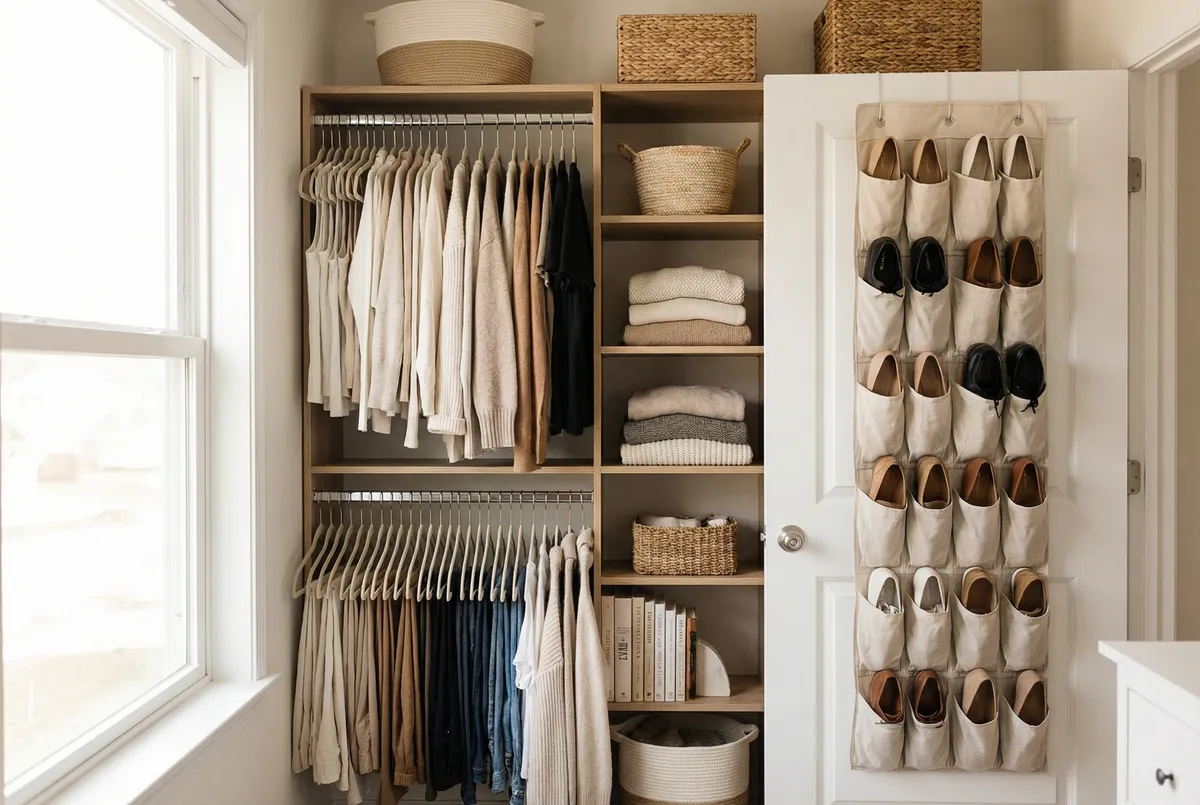
- Clear pocket shoe organizers (holds 20-36 pairs)
- Hook systems for tomorrow’s outfit, robes, or bags
- Accessory organizers for scarves, belts, and jewelry
- Small pocket organizers for socks, underwear, or workout gear
I use a 24-pocket clear organizer on my door. It holds 18 pairs of shoes plus rolled socks and gym accessories in the remaining pockets. This freed up 3 square feet of floor space.
Hanging Closet Organizers
These fabric shelving units hang from your existing rod and create 6-10 compartments for folded clothes, shoes, or accessories.
What works:
- Sweaters on upper shelves (prevents stretching from hangers)
- Jeans and casual pants in middle sections
- Shoes in reinforced bottom compartments
- Workout clothes or pajamas in zippered sections
These organizers require zero installation and can be moved or removed easily. Perfect for renters or people who reorganize frequently.
Drawer Towers and Modular Systems
If you have floor space, add a small drawer tower (12-16 inches wide, 5-7 drawers high). This gives you dresser functionality inside your closet.
What goes in drawers:
- Underwear and socks (top drawer)
- T-shirts and casual wear (middle drawers)
- Workout clothes or sleepwear (lower drawers)
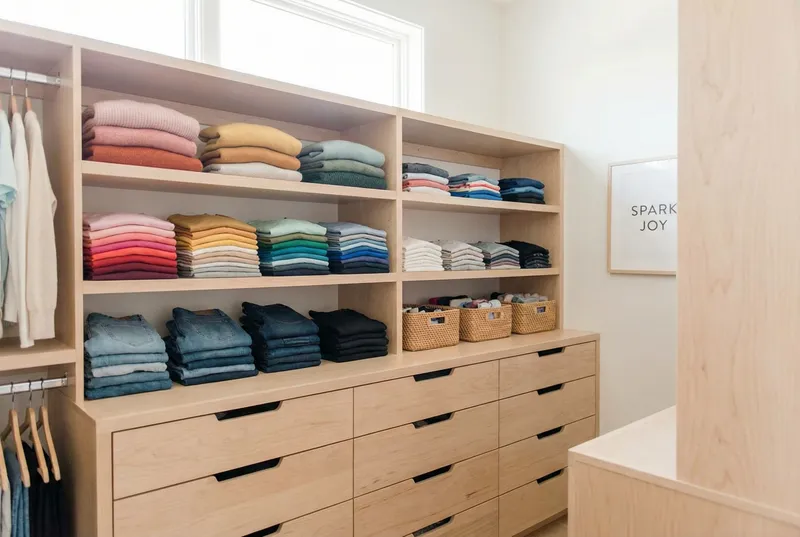
Use the file-folding method where clothes stand vertically instead of stacking flat. This lets you see everything at once and prevents the “I forgot I owned this” problem.
Shoe Storage Solutions
Shoes consume valuable floor space and create visual clutter. Here’s how to fix it:
Option 1: Over-the-door shoe organizer (best for most people)
- Holds 20-36 pairs
- Keeps shoes visible and accessible
- Frees up all floor space
Option 2: Vertical shoe rack (if you have floor space)
- Stackable shelves hold 20-30 pairs
- Angled shelves prevent shoes from sliding
- Works well in corners
Option 3: Under-shelf baskets (if you have shelf space)
- Clip onto existing shelves
- Hold 4-6 pairs per basket
- Utilize space that would otherwise be empty
I use a combination: over-the-door organizer for everyday shoes, under-shelf baskets for seasonal pairs, and a small rack for boots.
Maximize Every Inch
Use Shelf Dividers
Shelf dividers prevent folded clothes from becoming messy piles. Install vertical dividers to create sections for different categories.
This keeps sweaters separated from t-shirts, prevents stacks from toppling over, and makes it easy to remove items from the middle without destroying the organization.
Add Under-Shelf Storage
Wire baskets that clip under existing shelves create bonus storage without installing new shelving. Use these for:
- Folded t-shirts
- Accessories
- Small bags
- Items you access frequently
Install Hooks Everywhere
Hooks are the most underutilized closet tool. Add them to:
- Side walls for bags, belts, or tomorrow’s outfit
- Back wall for robes or jackets
- Inside the door for frequently worn items
Position hooks at different heights: eye level for daily items, shoulder height for jackets, lower for bags.
Utilize Corner Spaces
Corners often become dead zones. Fix this with:
- Corner shelving units
- Rotating lazy Susan platforms
- Triangular storage bins
These solutions turn wasted space into functional storage.
The Maintenance System
Organization fails when there’s no system for maintaining it.
The One-Touch Rule
When you take something off, put it back immediately. Don’t drape it over a chair or toss it on the bed. Hang it up or put it in the hamper.
This prevents the “I’ll deal with it later” pile that destroys organization.
The Weekly Reset
Spend 10 minutes every Sunday resetting your closet:
- Rehang anything that fell
- Return items to their designated spots
- Move worn items to the hamper
- Straighten shelves and drawers
This prevents small messes from becoming overwhelming chaos.
The Seasonal Rotation
Twice a year (spring and fall), rotate seasonal items:
- Move winter clothes to storage
- Bring summer clothes to prime locations
- Reassess what you actually wore last season
- Donate items you skipped repeatedly
This keeps your closet focused on current-season items and prevents overcrowding.
Common Mistakes to Avoid
Mistake 1: Buying Organizers Before Decluttering
You don’t need more storage. You need less stuff. Declutter first, then assess what organizational tools you actually need.
I wasted $200 on storage bins before I decluttered. After removing items I didn’t wear, I needed zero new organizers.
Mistake 2: Hanging Everything
Not everything should hang. Sweaters stretch on hangers. T-shirts take up too much rod space. Jeans work better folded.
Hang: Dresses, blouses, dress shirts, pants that wrinkle easily, jackets Fold: Sweaters, t-shirts, jeans, casual pants, workout clothes
Mistake 3: Ignoring Vertical Space
If you’re only using the space between the floor and your single hanging rod, you’re wasting 50% of your closet.
Install a second rod, add shelving to the ceiling, use over-the-door organizers, and utilize wall space with hooks.
Mistake 4: No Designated Homes
When items don’t have specific spots, they end up wherever there’s space. This creates chaos.
Assign every category a specific location. Shoes always go in the over-the-door organizer. Sweaters always go on the third shelf. Belts always hang on the side wall hook.
Your First Week Challenge
Transform your closet in seven days:
Day 1: Declutter everything. Be ruthless. Remove items you haven’t worn in a year.
Day 2: Move seasonal items to storage elsewhere. Clear out winter coats if it’s summer, swimsuits if it’s winter.
Day 3: Install a second hanging rod or closet doubler. This is the highest-impact change.
Day 4: Add over-the-door shoe organizer and move all shoes off the floor.
Day 5: Organize remaining items by category and frequency. Group similar items together.
Day 6: Add shelf dividers, under-shelf baskets, or hooks to maximize remaining space.
Day 7: Implement the one-touch rule and weekly reset system.
After one week, you’ll have a closet that feels twice as large, makes getting dressed easier, and actually stays organized.
The Real Secret
Small closet organization isn’t about buying more stuff. It’s about using what you have more intelligently.
Most people fail because they try to organize chaos. You can’t organize clutter. You can only organize the things you actually use and wear.
Start with brutal decluttering. Then maximize vertical space. Then organize by category and frequency. Then add only the storage solutions you actually need.
The goal isn’t a magazine-perfect closet. The goal is a functional closet that makes your life easier. That’s achievable in any size space.