You don’t need a designer budget to create a home that looks pulled together and stylish. The secret isn’t spending more money. It’s knowing where to spend, where to save, and which tricks make the biggest visual impact.
Start With Paint
Paint is the single most cost-effective way to transform a space. A gallon of quality paint costs around $30-40 and can completely change the feel of a room. Choose colors carefully and you can make a small room feel larger or a boring room feel sophisticated.
Accent walls are having a moment, but here’s a better trick: paint your trim and doors a crisp white or deep black. This creates contrast and makes your walls look more intentional, even if they’re just a basic neutral color. The trim is what frames everything else, so making it look sharp elevates the entire room.
Don’t overlook your ceiling. A coat of fresh white paint on a dingy ceiling makes a room feel cleaner and brighter. If you’re feeling bold, try a soft color on the ceiling. Light blue can make a room feel taller, while a warm tone adds coziness.
Upgrade Your Hardware
Cabinet pulls, drawer handles, and door knobs are small details that make a big difference. Replacing dated brass or basic chrome hardware with modern matte black or brushed gold options costs maybe $50-100 for an entire kitchen, but the impact is dramatic.
You can find affordable hardware at home improvement stores or online. Measure your existing hardware before shopping so you know what size you need. Installation is simple and requires just a screwdriver.
The same principle applies to curtain rods. Swap out thin, cheap-looking rods for thicker ones in a finish that matches your other hardware. Hang them high and wide to make windows look larger and more impressive.
Invest in Good Lighting
Lighting can make or break a room, and it’s one area where spending a bit more pays off. But you don’t need expensive fixtures. You need the right bulbs and the right placement.
Replace harsh overhead lighting with multiple light sources at different heights. A floor lamp in one corner, a table lamp on a side table, and maybe some LED strips behind furniture create layers of light that feel warm and inviting. This setup costs less than one fancy chandelier but looks more sophisticated.
Use warm white bulbs (2700K-3000K) instead of cool white. Warm light makes spaces feel cozy and expensive. Cool white light feels like an office or hospital. This simple switch costs nothing extra but changes the entire mood of your home.
Dimmer switches are another affordable upgrade. They let you adjust lighting for different times of day and different activities. Installation is straightforward if you’re comfortable with basic electrical work, or hire an electrician for about $100-150 to do several rooms.
Style Your Shelves and Surfaces
Empty shelves and bare surfaces make a home feel unfinished. But filling them with random stuff makes it feel cluttered. The trick is curated styling that looks intentional.
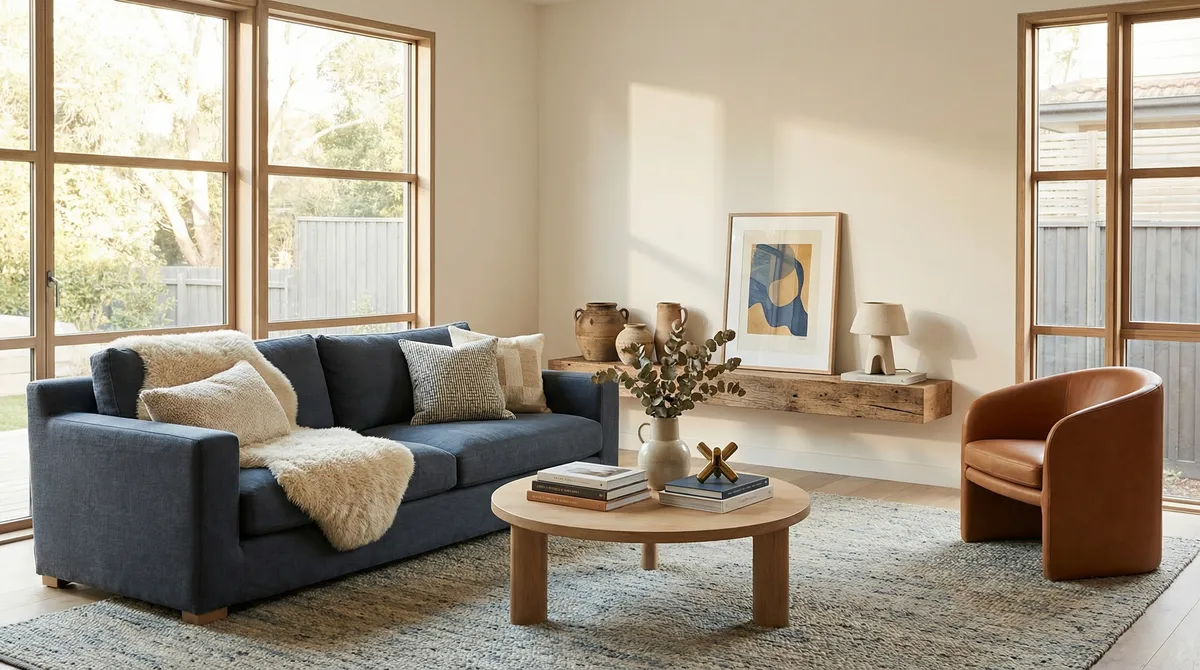
Use the rule of three: group items in odd numbers. Three books stacked horizontally, a small plant, and a decorative object create a vignette that looks purposeful. Vary heights and textures for visual interest.
Shop your own home first. That vase in the back of a cabinet might look perfect on a shelf. Books you already own can be styled with covers facing out if they have nice designs. Family photos in matching frames create a gallery wall that’s personal and polished.
Thrift stores and discount home stores are goldmines for decorative objects. Look for items in materials like brass, wood, or ceramic. Avoid anything too trendy or obviously cheap-looking. Classic shapes and natural materials always look more expensive than plastic or overly decorated pieces.
Add Texture With Textiles
Throw pillows, blankets, and rugs add warmth and texture without permanent commitment. But here’s the key: buy fewer, better-quality pieces instead of lots of cheap ones.
One chunky knit throw blanket draped over your sofa looks more expensive than three thin fleece blankets. Two large, well-made throw pillows in complementary colors beat six small, flat pillows from a discount store.
For rugs, size matters more than price. A too-small rug makes a room feel disjointed. In a living room, your rug should be large enough that at least the front legs of your furniture sit on it. A larger, simple rug from a discount store looks better than a small, ornate expensive one.
Layer rugs if you can’t afford a large one. Put a smaller patterned rug over a larger neutral one. This trick adds visual interest and makes both rugs look more intentional.
Create Focal Points
Every room needs a focal point that draws the eye. In a living room, it might be a gallery wall or a statement piece of furniture. In a bedroom, it’s usually the bed.
Gallery walls cost almost nothing but look impressive. Use frames you already have or buy matching frames from a discount store. Mix family photos with art prints (you can find free printable art online), postcards, or even pages from old books. Arrange them on the floor first to plan your layout, then hang them.
For your bed, invest in good bedding. You don’t need expensive sheets, but get a duvet cover in a solid color or simple pattern. Add a few quality pillows and a throw blanket at the foot of the bed. This hotel-style layering looks luxurious and costs less than you’d think.
Use Mirrors Strategically
Mirrors make spaces feel larger and brighter by reflecting light. A large mirror opposite a window doubles the natural light in a room. Leaning a full-length mirror against a wall creates a casual, expensive look.
You can find affordable mirrors at discount stores, thrift shops, or even yard sales. If the frame is dated, spray paint it in a modern color. Matte black, white, or gold spray paint costs about $5 and completely transforms a mirror.
Group smaller mirrors together to create impact. Three or four mirrors of different sizes arranged on a wall create an interesting focal point that costs less than one large statement mirror.
Bring in Plants
Real plants add life and color to a space. They also purify air and create a connection to nature that makes homes feel more welcoming. You don’t need expensive plants or fancy pots.
Start with easy-care plants like pothos, snake plants, or spider plants. These tolerate neglect and low light, making them perfect for beginners. Buy small plants and let them grow. A $5 pothos cutting will fill out a pot in a few months.
Use interesting containers instead of buying expensive planters. Thrift store finds, vintage tins, or even painted terracotta pots work beautifully. Drainage is important, so drill holes if needed or use the decorative container as a cover for a plastic nursery pot.
Group plants at different heights for visual interest. A tall plant on the floor, a medium plant on a stand, and a small plant on a shelf create layers that look intentional and designed.
Edit and Declutter
Sometimes the best decorating move is removing things rather than adding them. Clutter makes even expensive furniture look cheap. Clear surfaces and organized spaces always look more expensive.
Go through each room and remove anything that doesn’t serve a purpose or bring you joy. Store seasonal items out of sight. Keep only the essentials on counters and tables.
This costs nothing and makes everything else in your home look better. A few well-chosen items displayed with breathing room look more expensive than lots of stuff crammed together.
The Bottom Line
Creating a beautiful home on a budget is about making smart choices, not spending more money. Focus on the changes that make the biggest impact: paint, lighting, and decluttering. Add in affordable updates like new hardware and styled shelves. The result is a home that looks thoughtfully designed and expensive, even when it’s not.
Remember, expensive-looking doesn’t mean copying magazine spreads. It means creating a space that feels intentional, cohesive, and well-maintained. Those qualities don’t require a big budget. They require attention to detail and knowing which tricks work.
Start with one room and one or two of these ideas. See what works for your space and your style. Build from there. Before you know it, you’ll have a home that looks like you spent thousands, when really you just spent smart.